
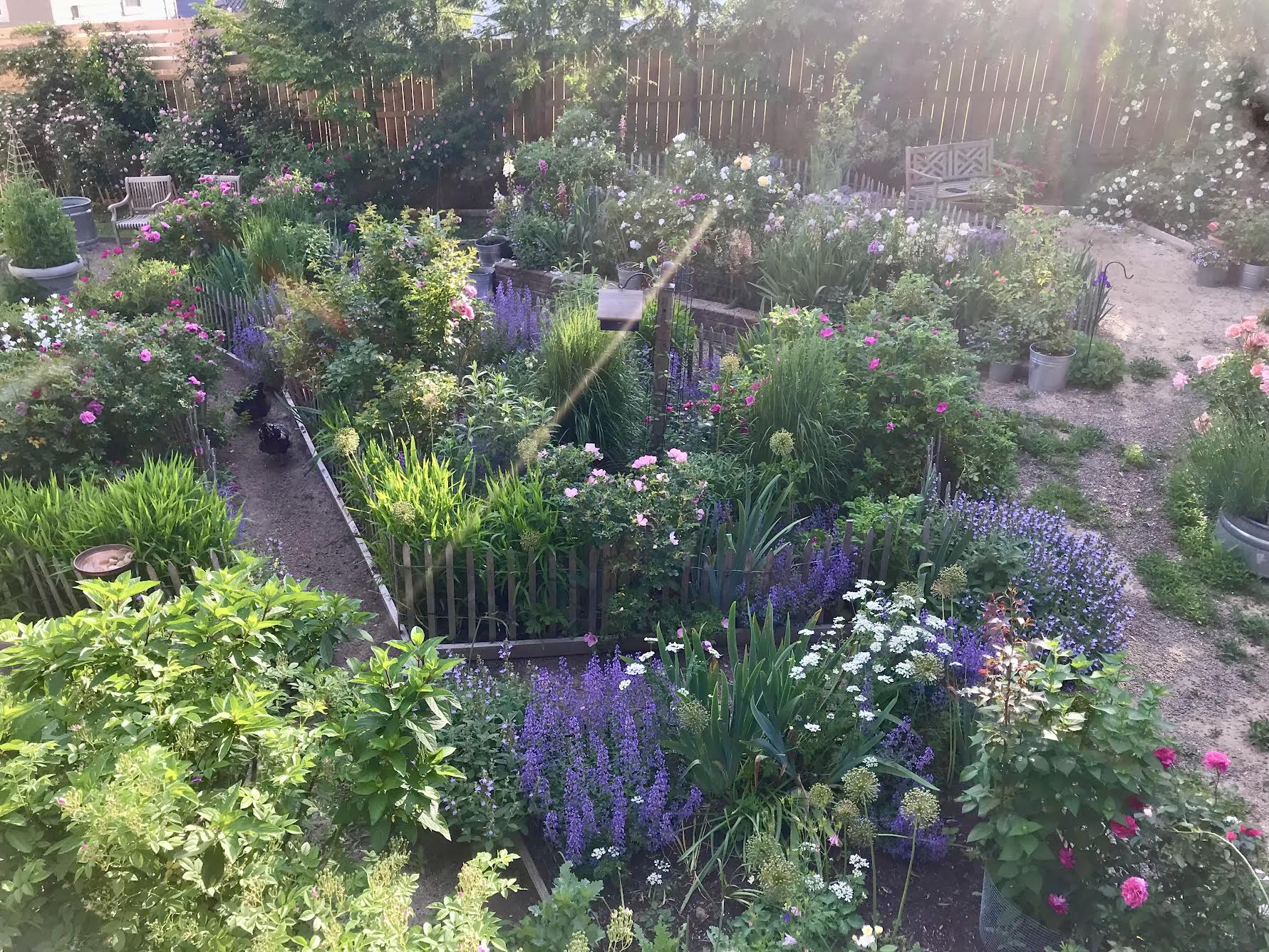
How we converted a suburban backyard into a lush, pollinator-filled oasis in under 3 years…
Years ago, in the middle of the night, Jesse and I pulled into the driveway of a plain ranch house in a suburban Pennsylvania neighborhood and I saw what would be our new home for the first time. After 13 hours of driving–Jesse in a moving truck filled with our furniture, dozens of potted roses and 5 very cranky chickens sitting up in the cab next to him, and me in the car with 3 exhausted cats and 1 anxious dog–we finally arrived back in our hometown, leaving our North Carolina adventure behind.
Friends, I strongly do not recommend moving into a home that you’ve only ever seen in photos but for us at the time, that was the only option. It isn’t hyperbolic to say it was traumatic for all of us. I still remember poor Maple climbing up onto my head in fear when I tried to settle the hens down in what would be their new coop that night after a day of traveling across six states in a noisy box truck. We did what we had to do and we made the best of a bad situation, but we still can’t think about those years without shuddering.
Not long after we arrived, the snow started flying and there wasn’t much we could do outdoors but I knew, deep in my very being, that I would never feel settled until I had made a garden. We began as soon as the ground was soft enough to dig in.
Some of you may remember this former garden which we began from scratch in spring 2019 and tended until we moved in autumn of 2021. During those years I shared a few posts about the roses and even how to have a garden when you also have lots of rabbits but the majority of the day-to-day images were on my erstwhile personal Insta account, sadly no longer available for viewing.
I thought that in light of the fact the archives of that former garden’s evolution are no longer viewable combined with the return to spring in just a few months, it would be a good time to talk about how we created that garden; my hope is that you find it inspiring and useful! {ETA: I write these posts not only to inform but to offer mental relief to myself and others who need it. Gardening has always been my way of coping with stress and lately, as an American, I know many of you would agree with me that the stress of recent events has been off the charts. Just wanted you to know that you’re not alone and we’ll get through it together.}
Quick note: Out of respect to the current owners I have chosen to block out the home if it appears in the background of any of the images. I apologize if it’s distracting. OK, let’s dive in!
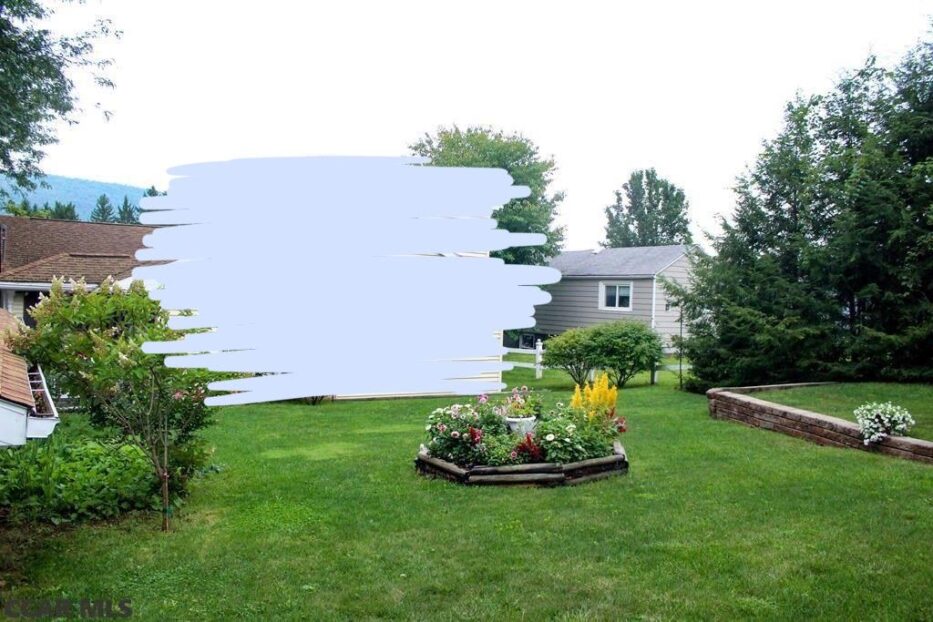
Here is a photo of the backyard from the real estate listing, 2018.
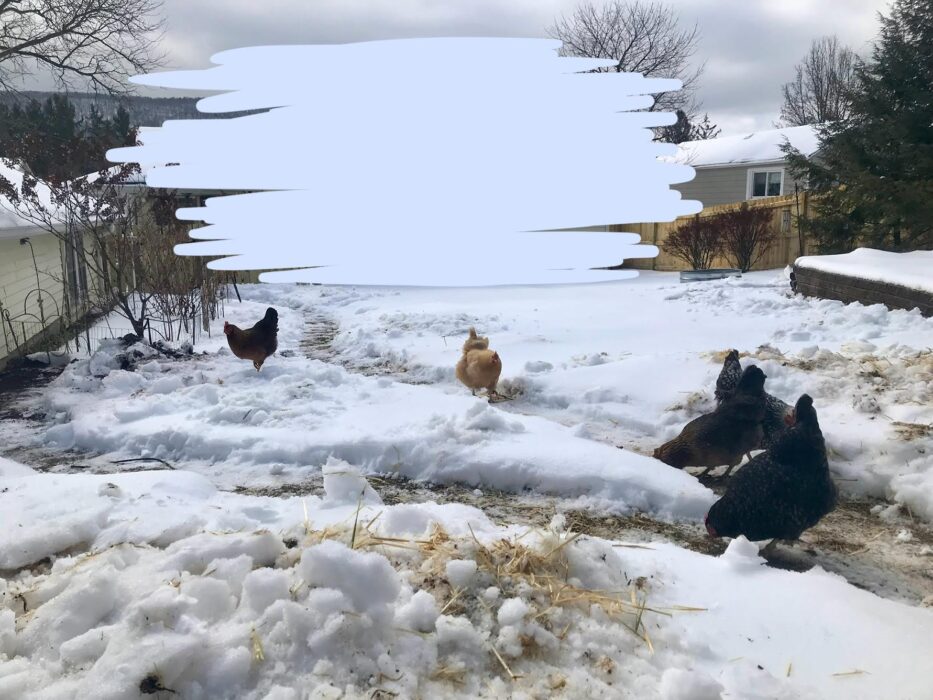
This is the same view in February 2019, shortly after we moved in. Under all that snow is mud and turfgrass. As you can see there were a few shrubs already in place such as a couple of winged Euonymus (which we removed) and some hydrangea. We had dozens of potted roses–most of them gallicas and rugosas–that we brought with us from North Carolina sitting in our unheated garage waiting to be planted.
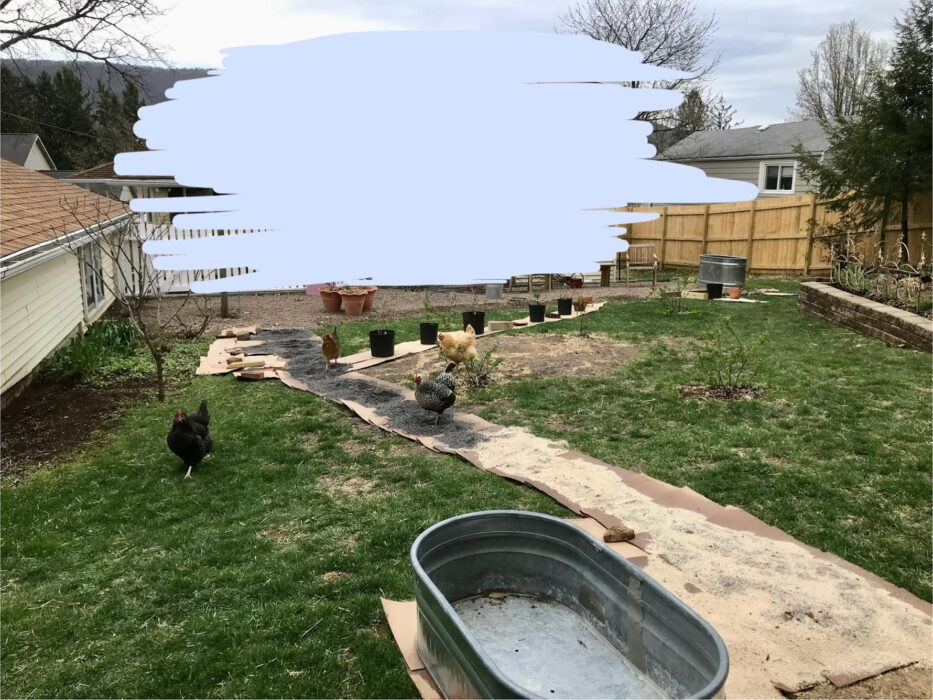
In early spring, we began planting the roses. We practice “no-dig” techniques in all of our gardens which means we try to disturb the soil as little as possible. In order to do that we simply dug a hole in right into the lawn and dropped the roses in. If you look closely, you can see Rosa rugosa ‘Scabrosa’ sticking out of the lawn on the right hand side. We used cardboard to lay out where we wanted the paths to go and planted the roses around them. In the background, you can see we have already laid down a patio area of gravel–again, with cardboard first to smother the grass.
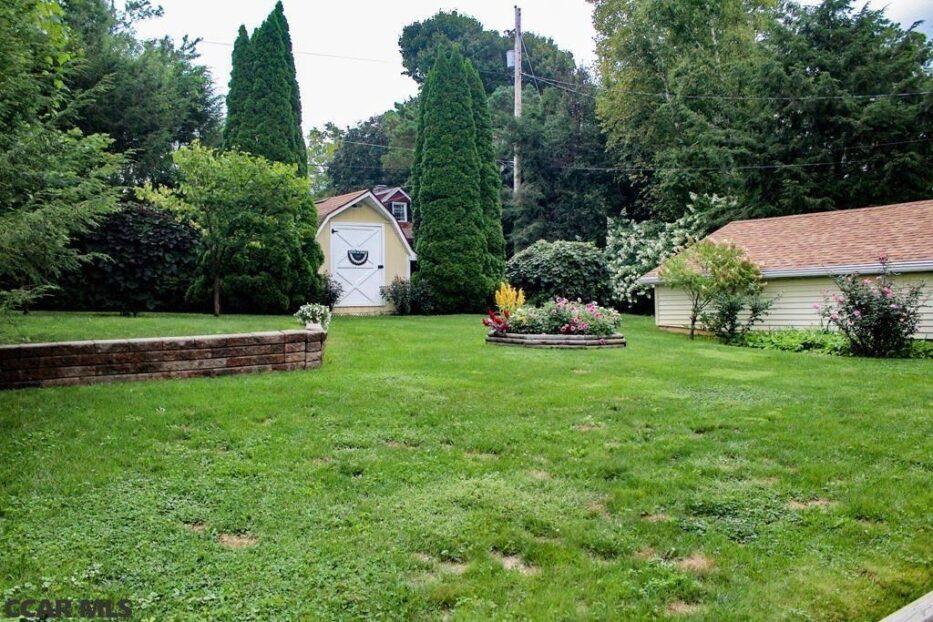
Another real estate listing photo looking back the other direction, 2018.
Something that made this garden extra challenging was that it was on the north side of the house but it still had sun traps in the center of the yard that we made the most of.
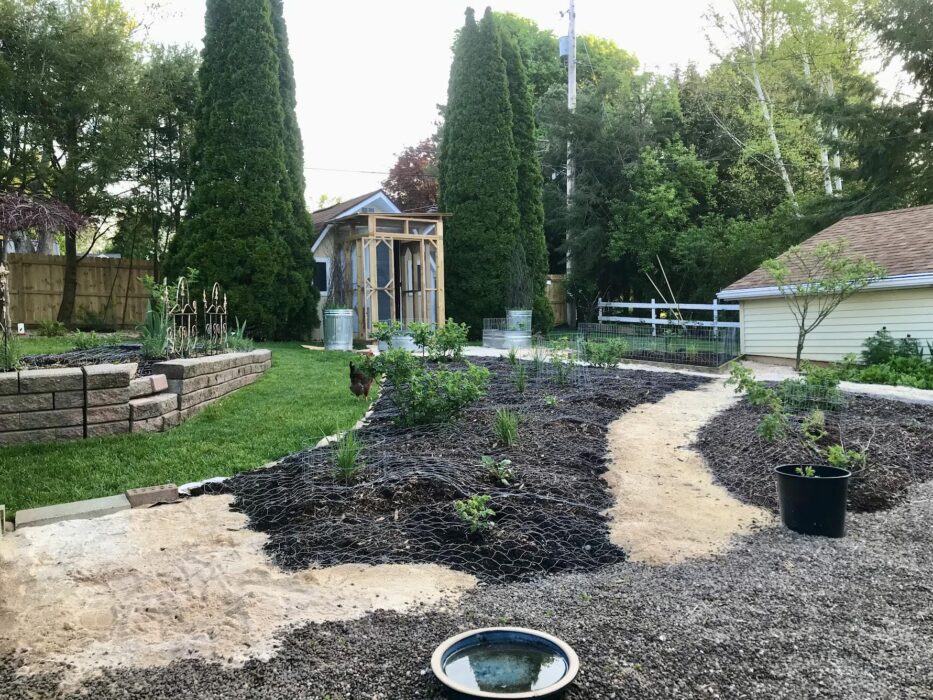
Now we’re about 2 months in, around April 2019. Cardboard is used to smother the grass and we topped all of that with a generous amount of compost for the roses and perennials to take nutrients from as the grass decays beneath. Apart from digging the holes for the new plants to go in, nothing else was dug or removed. In this photo, we have also started laying sand and gravel where paths will go. It looks a bit silly right now but it’s starting to take shape. By the way, the chicken wire was put in temporarily to keep the chickens from scratching in the new beds.
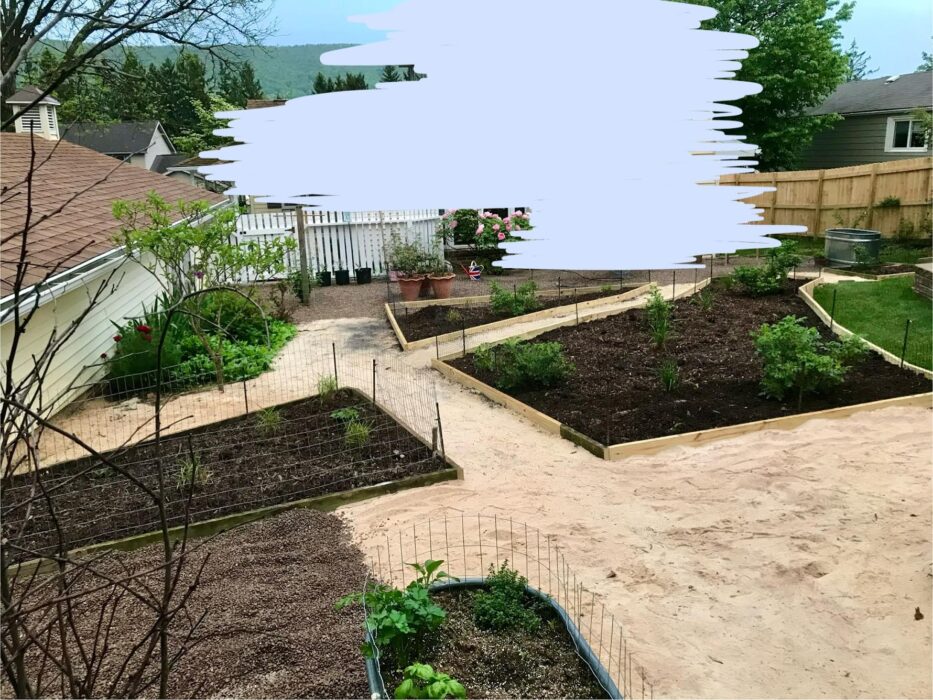
Here we are around May, 2019. The beds are starting to get borders with timber we had lying around. There is temporary fencing to keep the chickens out. Underneath all that sand, gravel and soil is the lawn being smothered by cardboard. The lawn will die in a few months and the cardboard will break down. Nutrients and organic material from both will remain to feed the soil.
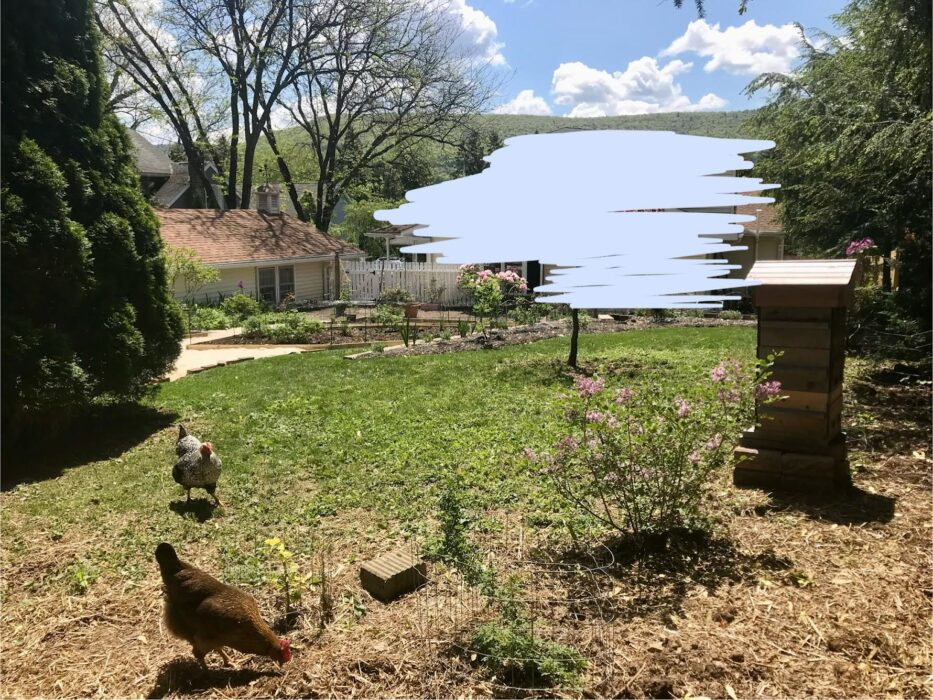
Looking from another direction, we can see more areas we needed to tackle. By the time we left this garden about 3 years later, there was only one tiny patch of lawn which we left for the chickens to graze on. Everything else was filled with pollinator and songbird-friendly plants.
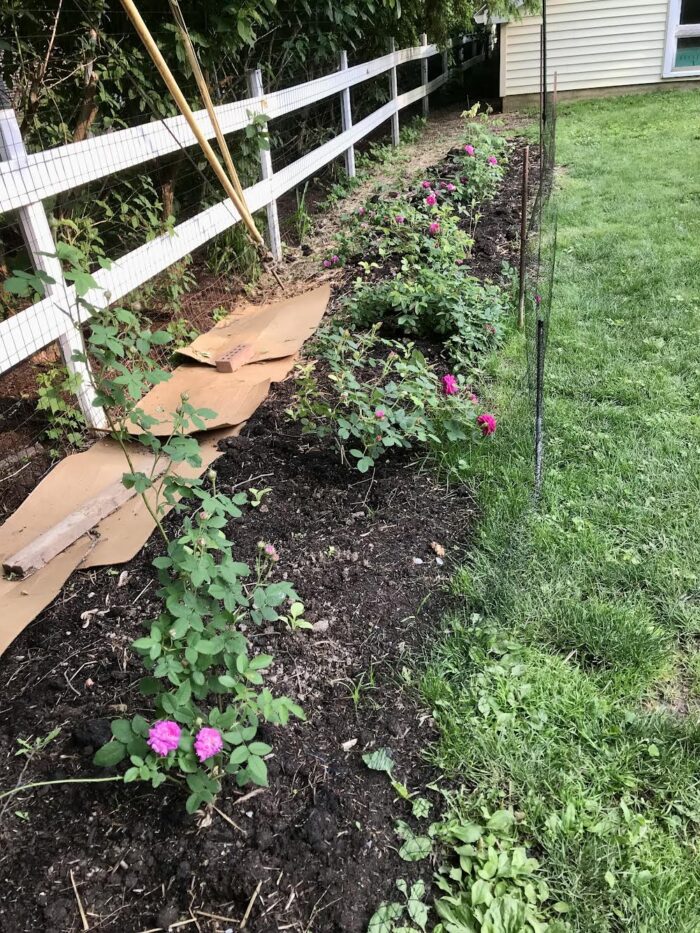
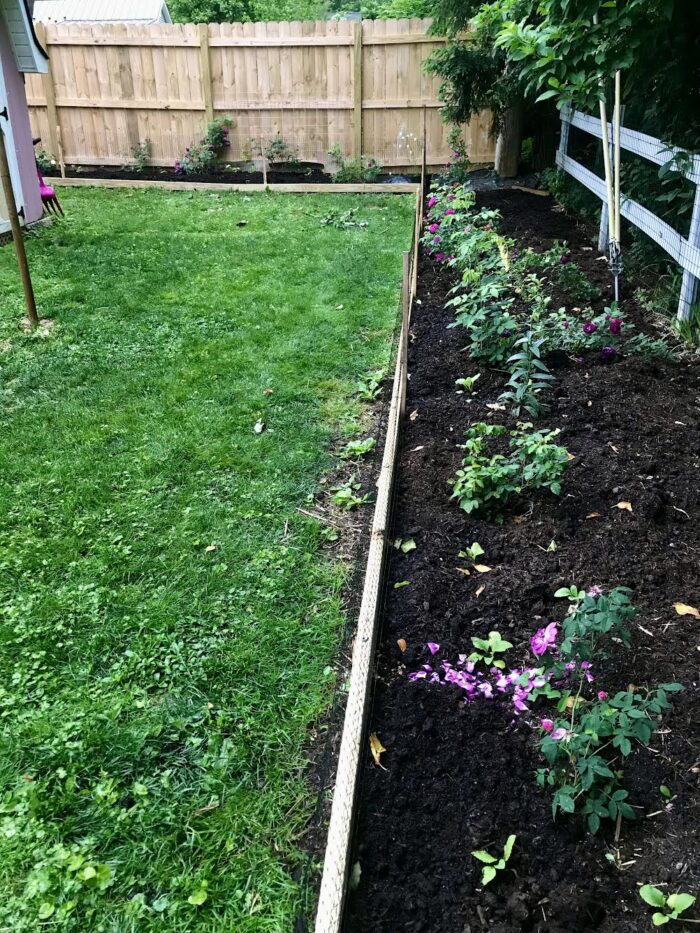
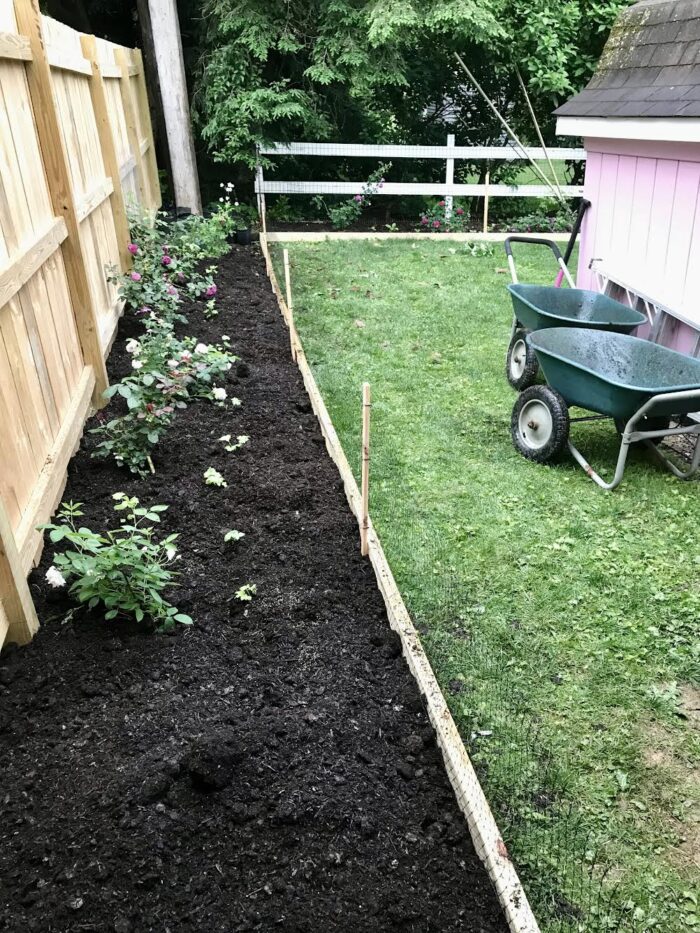
Here’s a view of two of the side borders that we lined with our gallica collection. As in the other section of the garden, we planted the roses and then did our carboard/compost trick.
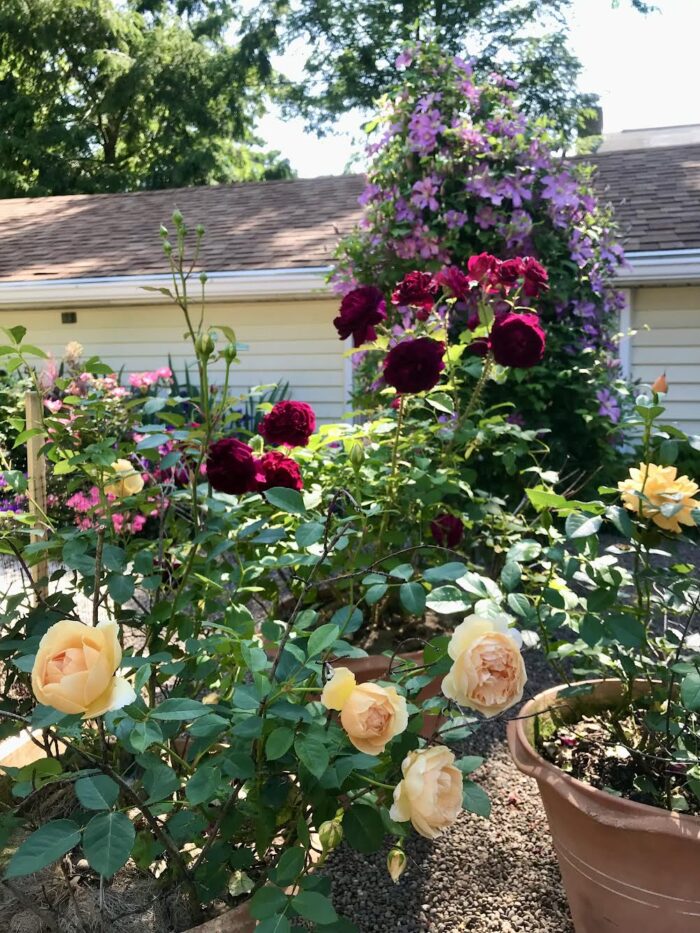
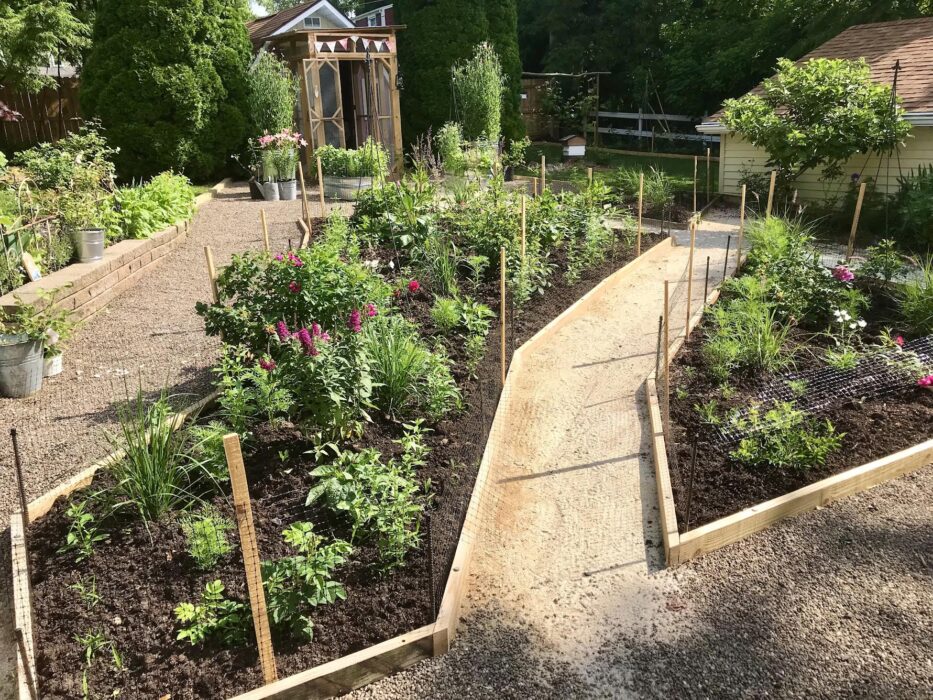
By June 2019, the roses were in flower and we were starting to feel like we had a garden again. We pressed on!
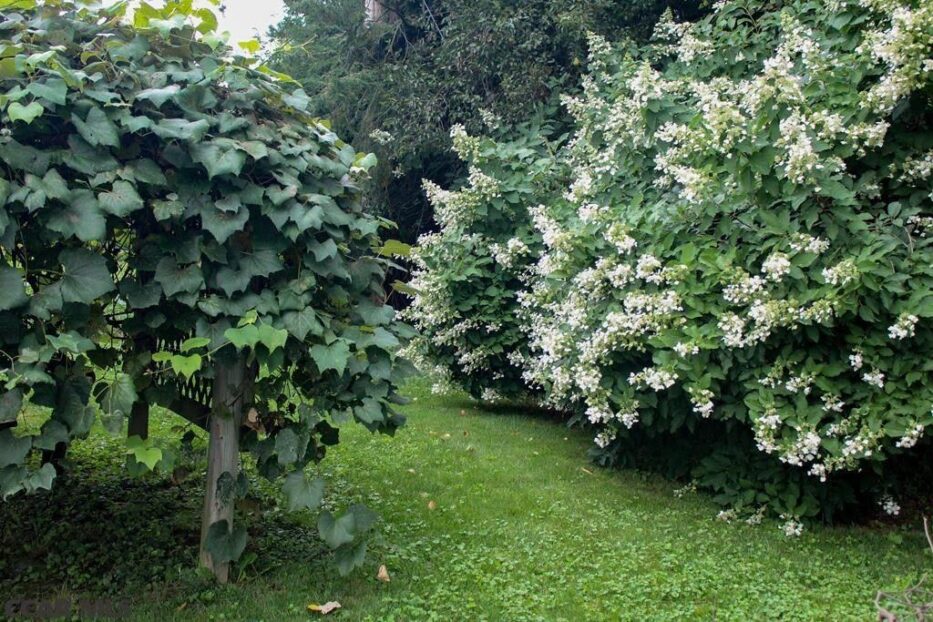
Real estate listing photo, 2018.
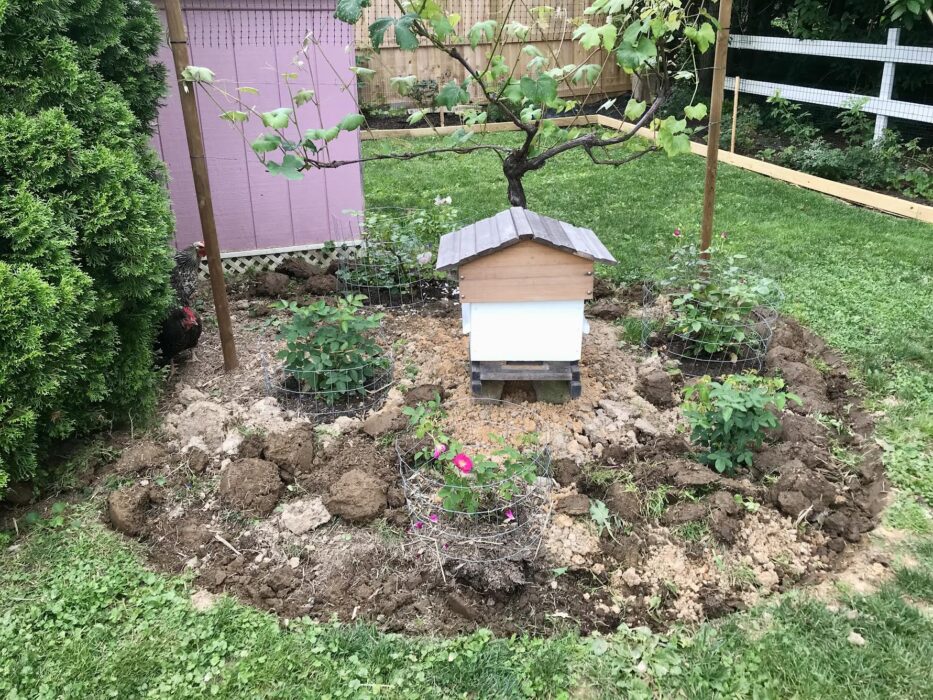
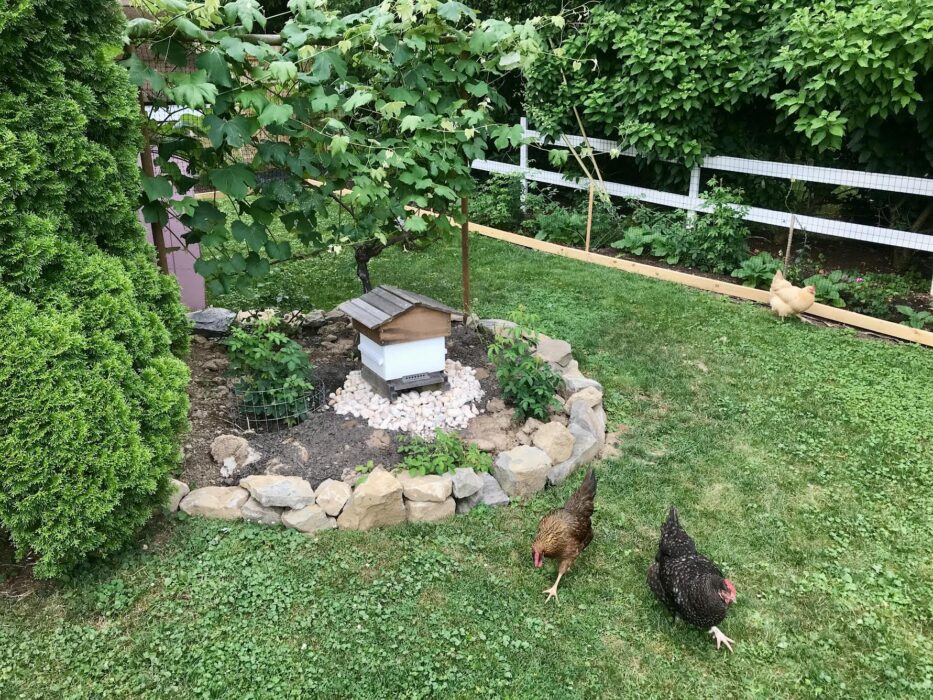
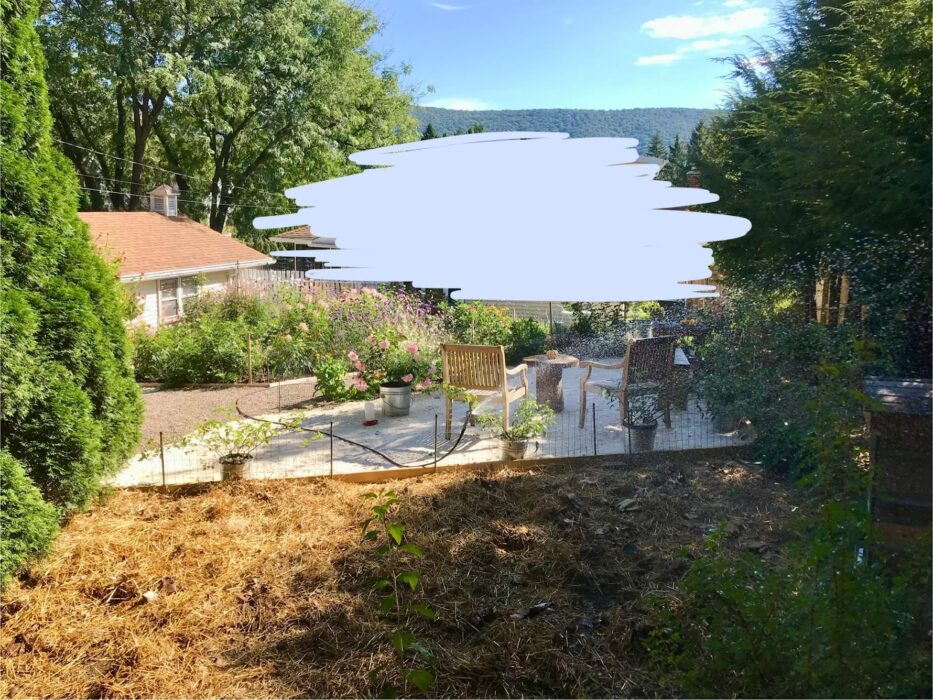
Same view. We trimmed back the overgrown grapevine and hydrangeas and made beds for the gallicas in this back corner by the old shed (painted Farrow & Ball “Cinder Rose.” I always wanted a pink structure in the garden and it was fun for that scenario but I probably wouldn’t do that again! The Warré hives are empty–they were remnants of what was left from our previous bees.)
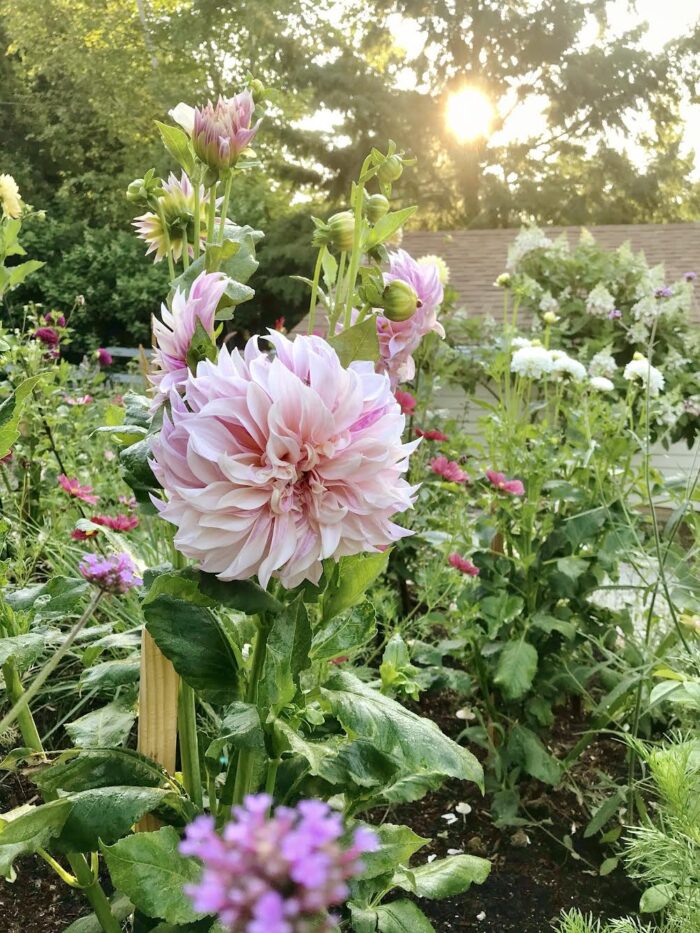
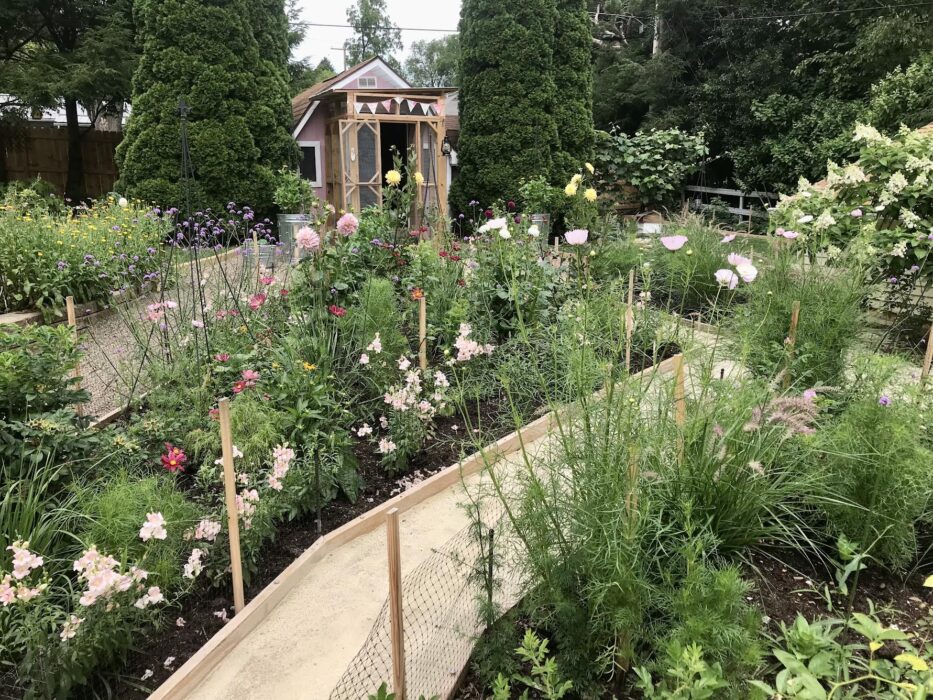
Here we are in July 2019, about 4 months after we began. I started a bunch of annuals from seeds and used them to fill in the gaps while the roses and perennials were getting established. We were happy with the progress but already we could see the writing on the wall…this would not be a forever home for us. I mention this because although we knew we didn’t want to live here indefinitely, it didn’t stop us from working on developing the garden. If anything, it made me more determined to work faster. I wanted to complete the picture I had in my mind of what this yard wanted to be: a haven for wildlife and pollinators in what was essentially a desert of suburban lawn-filled homes. I knew that I would never feel ok about someday leaving if I didn’t do this, first. (We were also renovating the interiors of the house at the same time–something I’ve talked about in previous posts.)
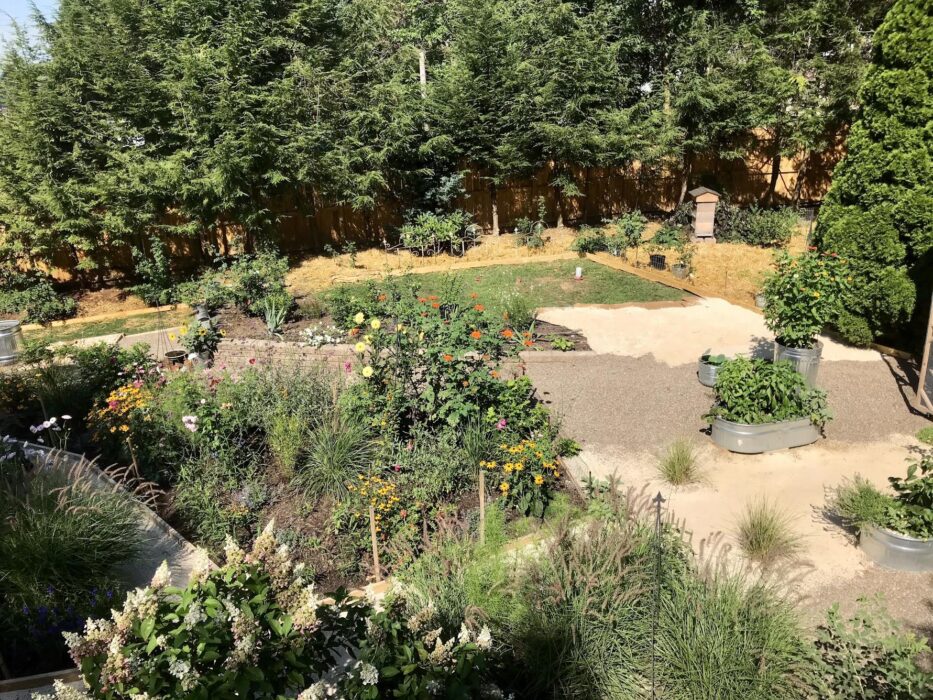
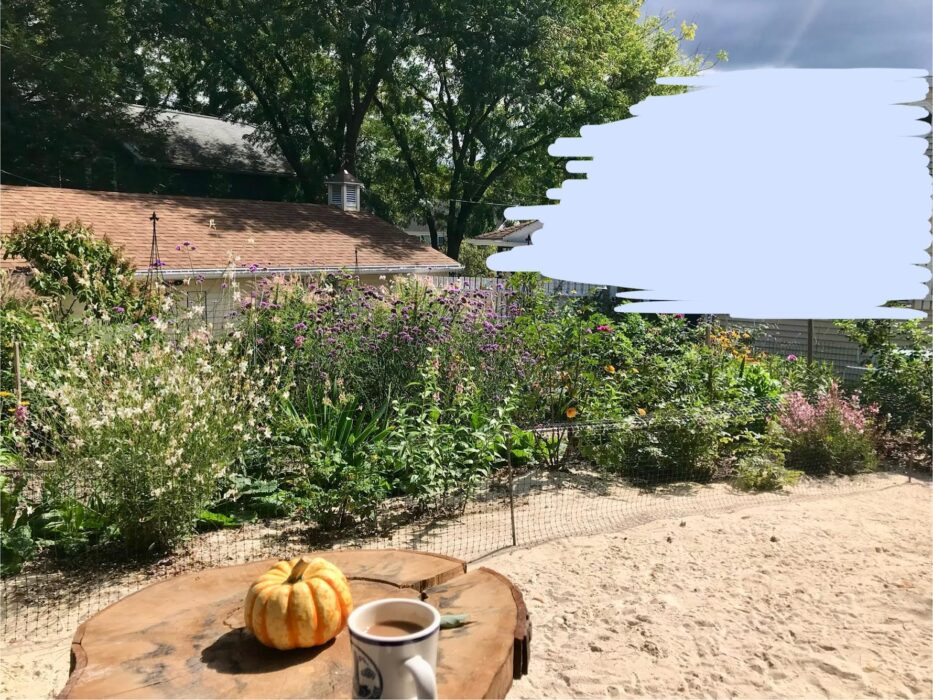
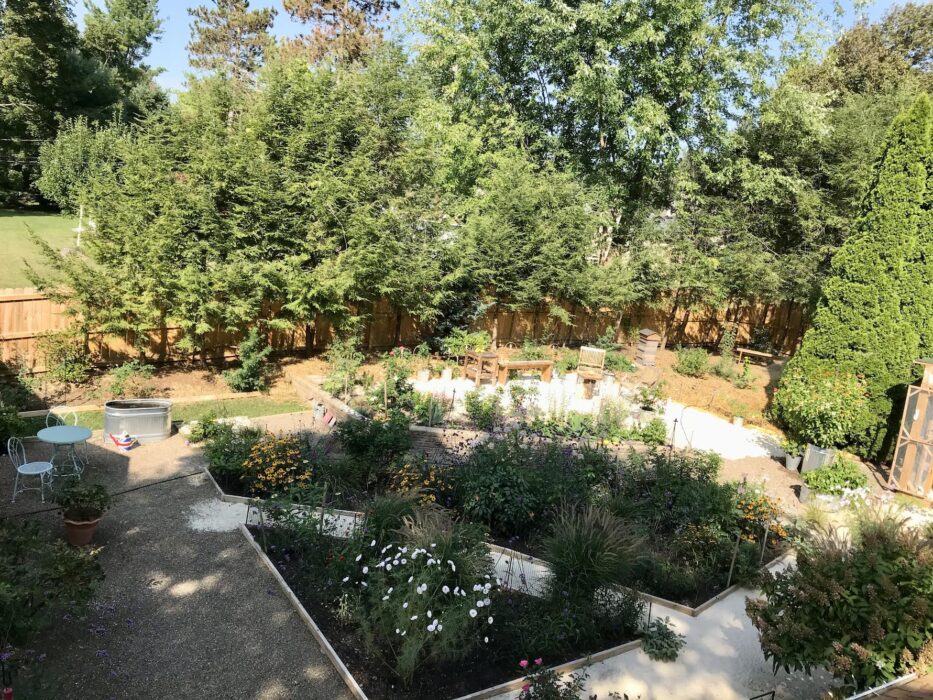
By August 2019, we began to expand into the further reaches of the backyard. First in the back corner under the hemlocks which we underplanted with woody shrubs and then into a once grassy area that was slightly elevated giving us a lovely area for sitting with coffee. The photos above show the progress and how we used our cardboard/sand method.
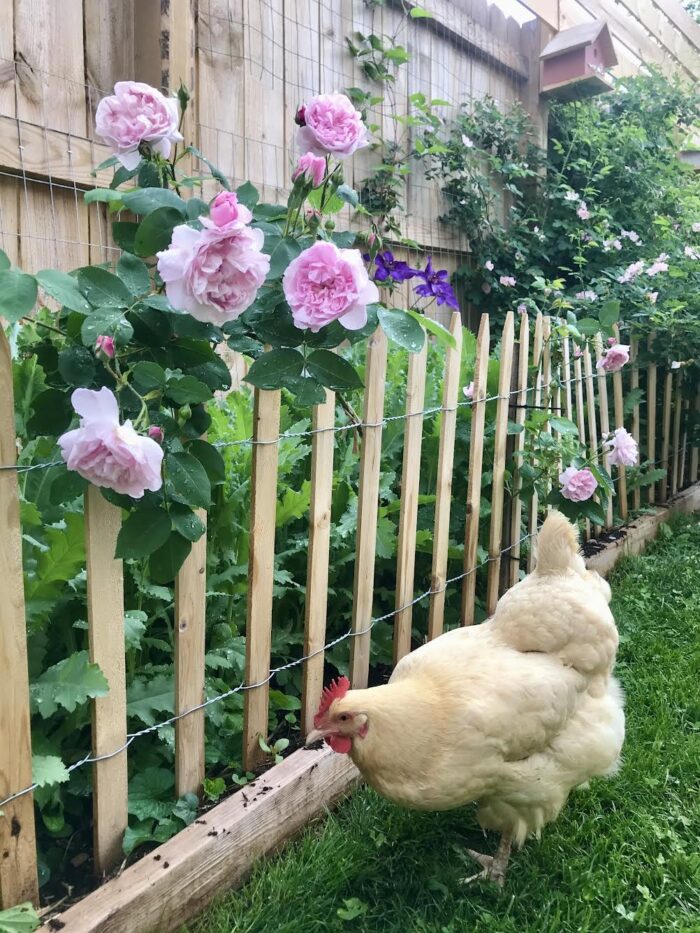
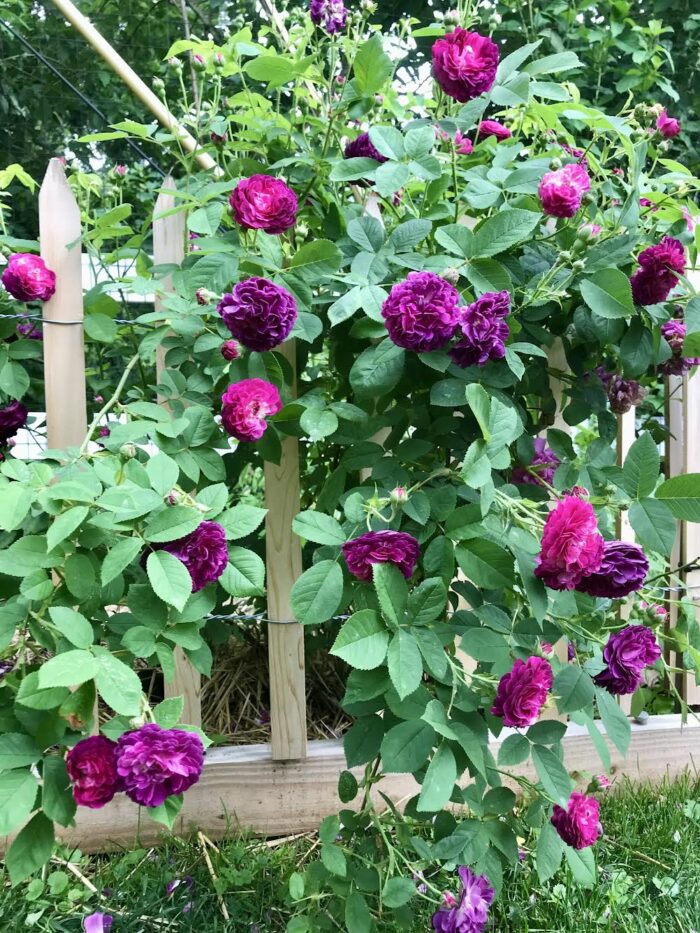
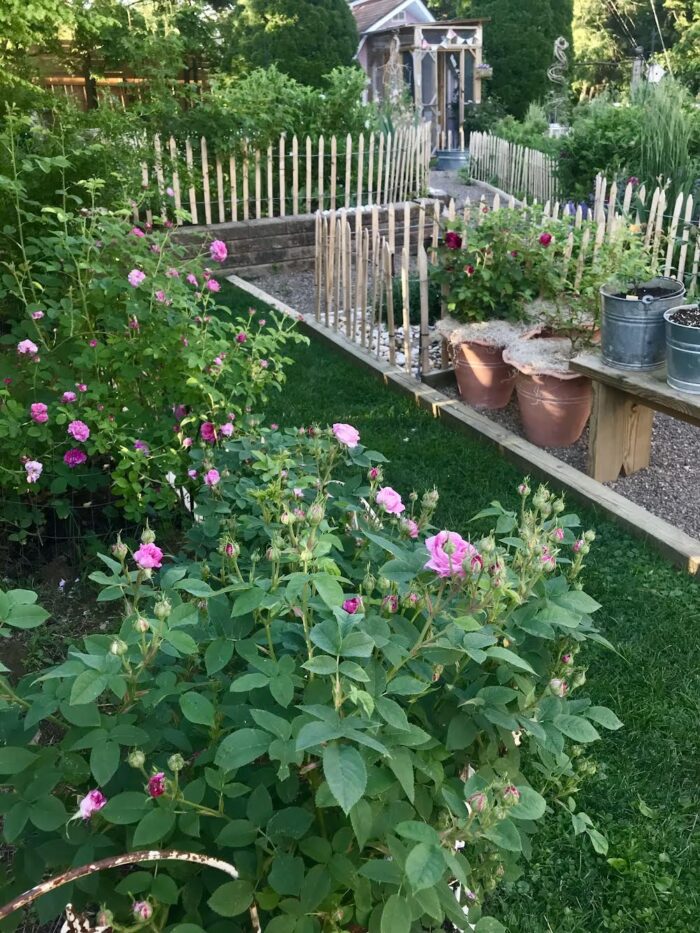
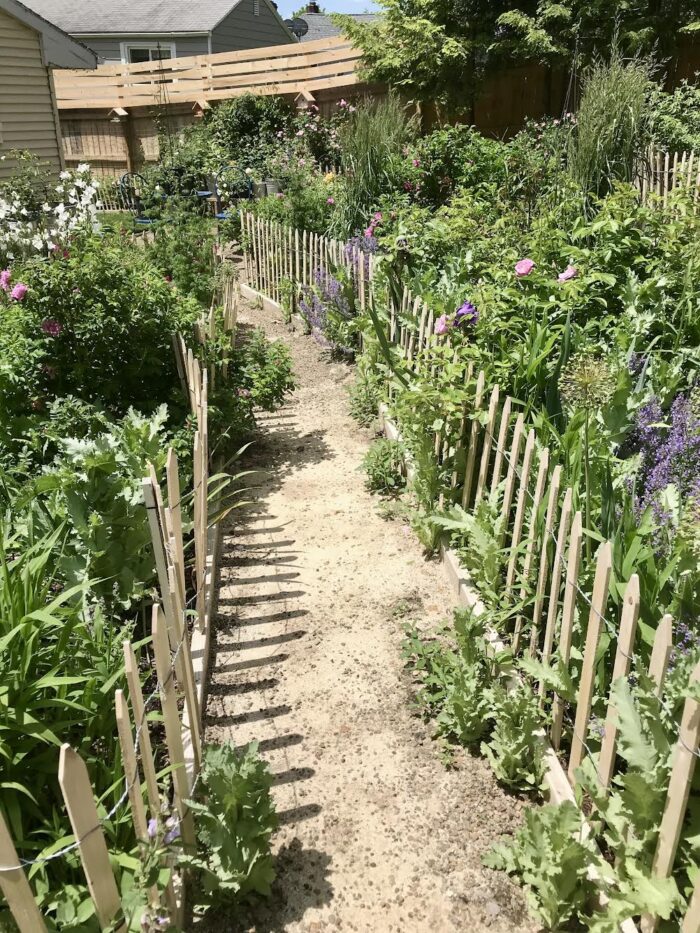
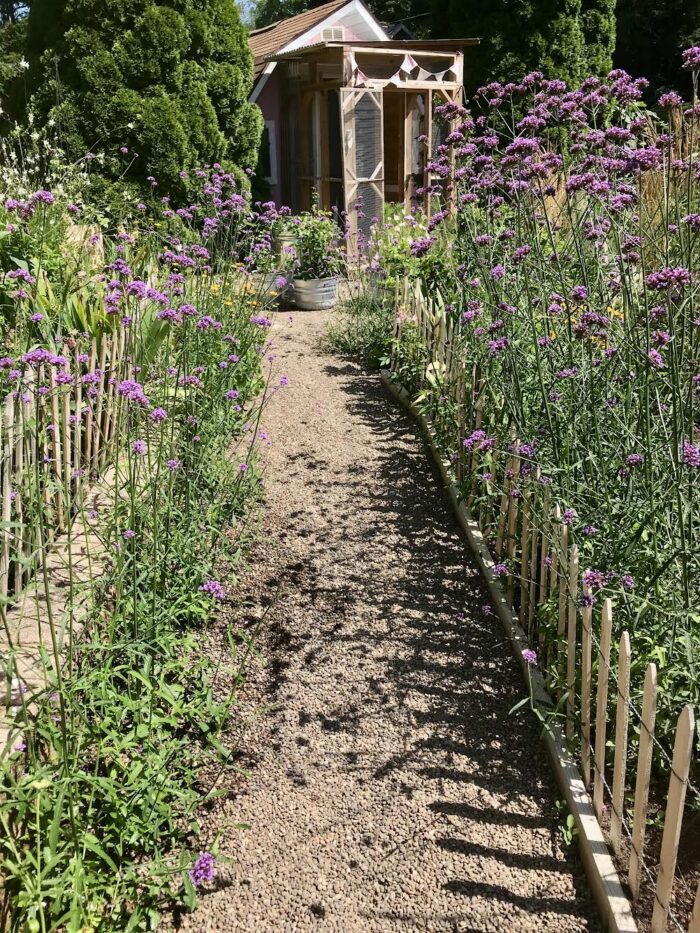
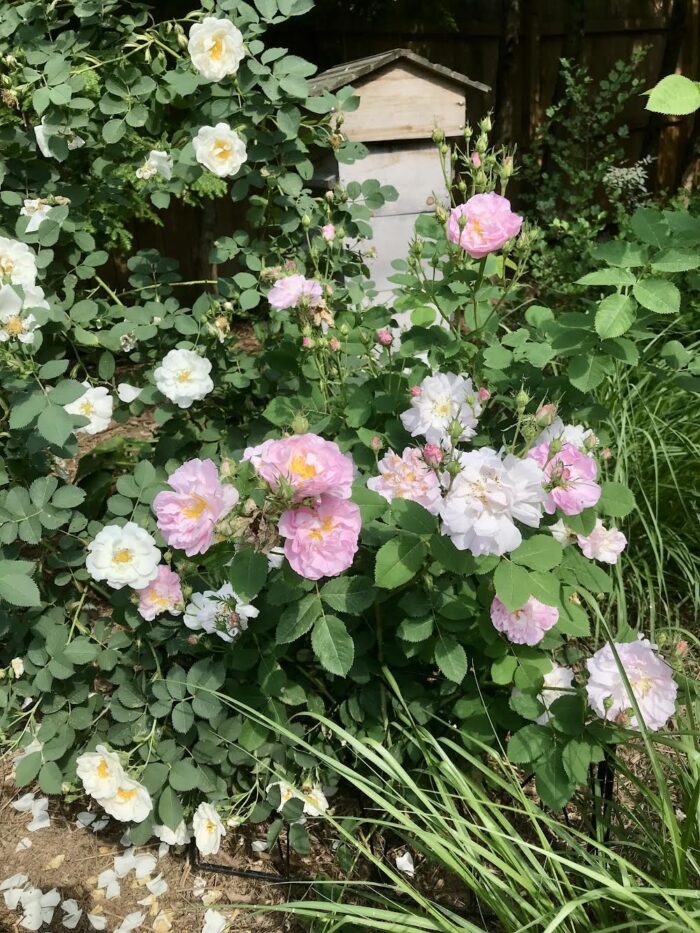
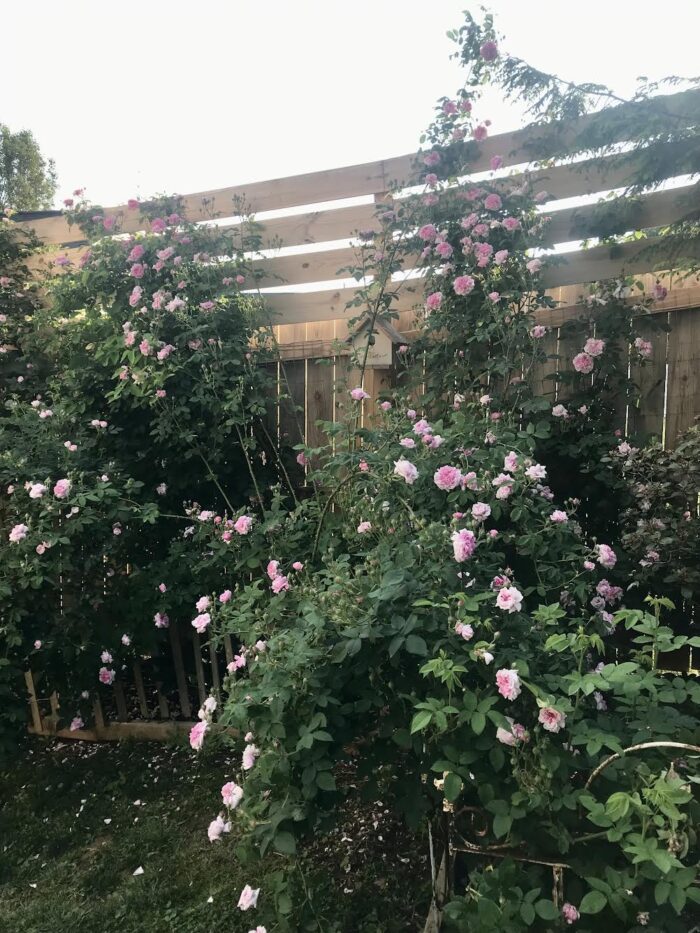
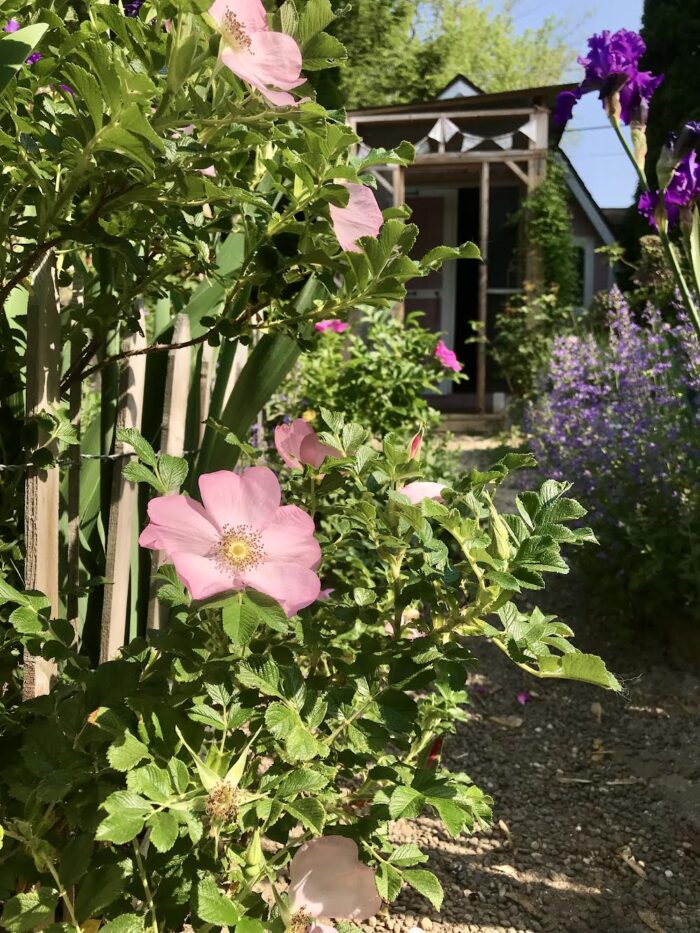
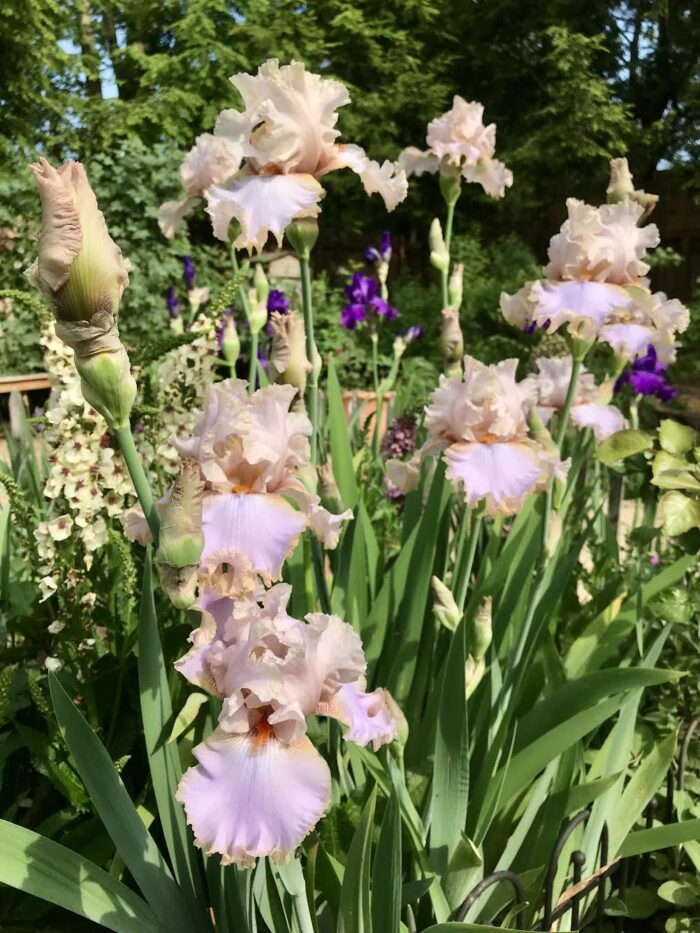
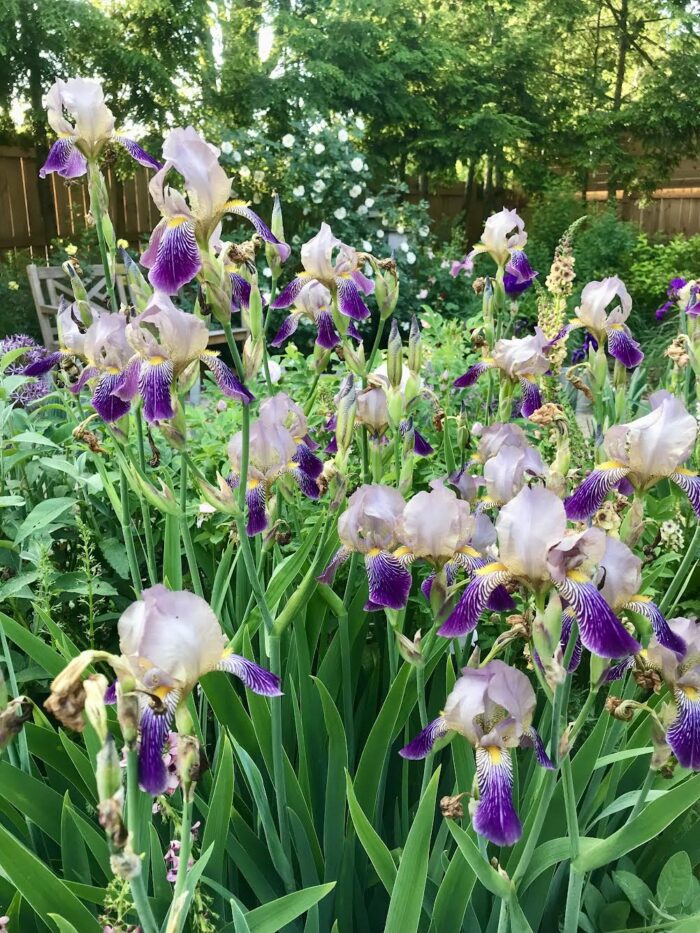
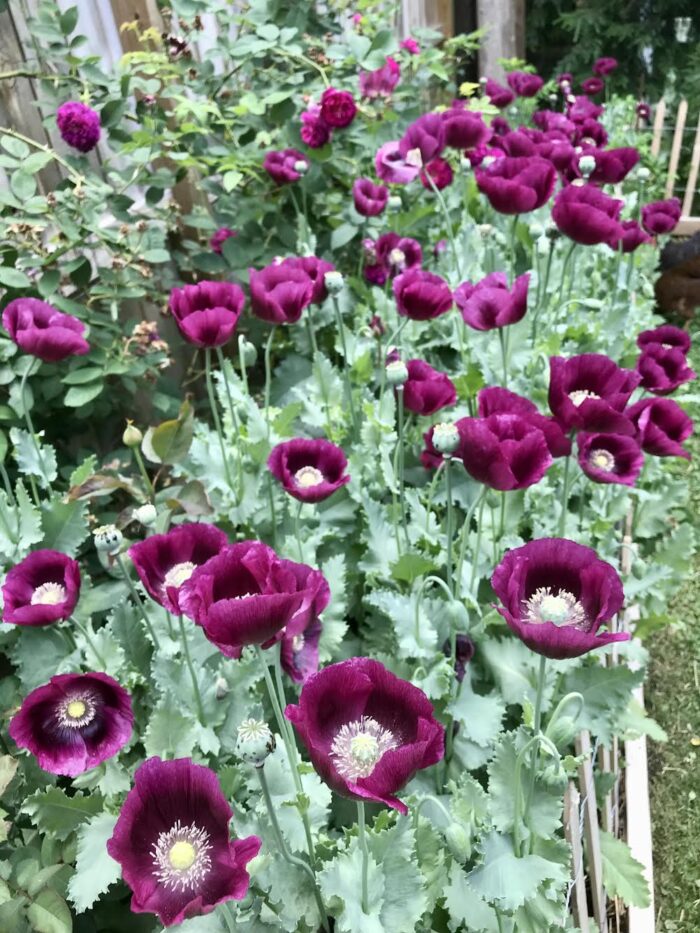
By spring of 2020, the roses were off to the races and the main portion of the garden had exceeded my expectations. The borders were filled with poppies and verbena from seeds I had sown in winter and iris that I had dug and divided the previous autumn now overflowing into the paths. Various native bees and songbirds moved in in droves. Rabbits starting showing up (for better and for worse.) The garden was alive. The sound of bees buzzing and birds singing went on from dawn to dusk while the spicy-sweet scent of the rugosa roses perfumed the air.
I won’t share too much more about the roses because I’ve already written a lot of posts about them. There are too many to list them all but here are a few of my favorites if you’re curious:
The Tapestry of Roses to Conceal a Privacy Fence
Princesse Charlène de Monaco Review
A Celebration of Roses (many to choose from)
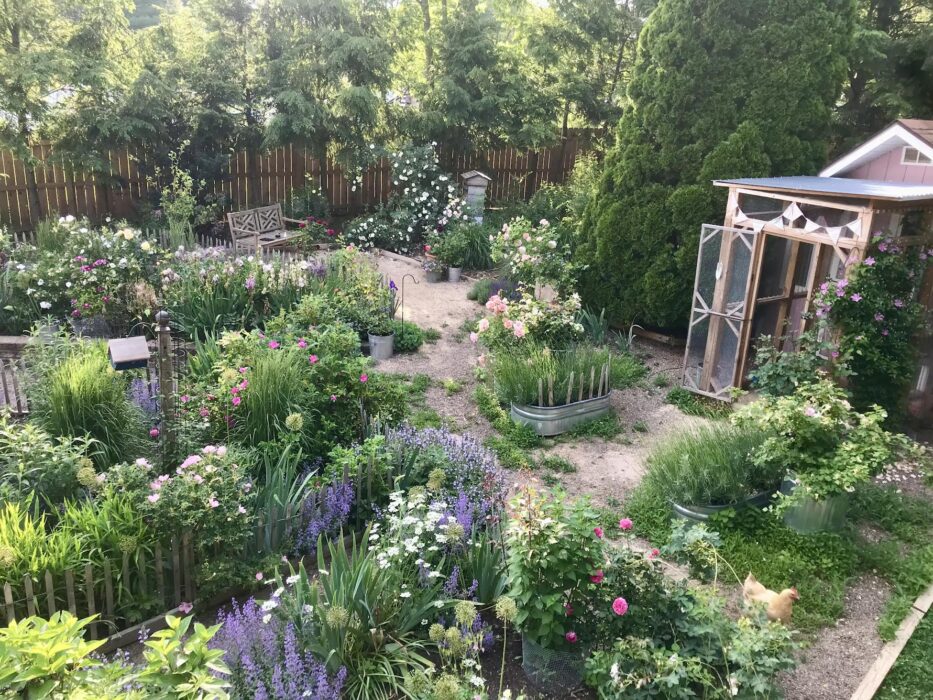
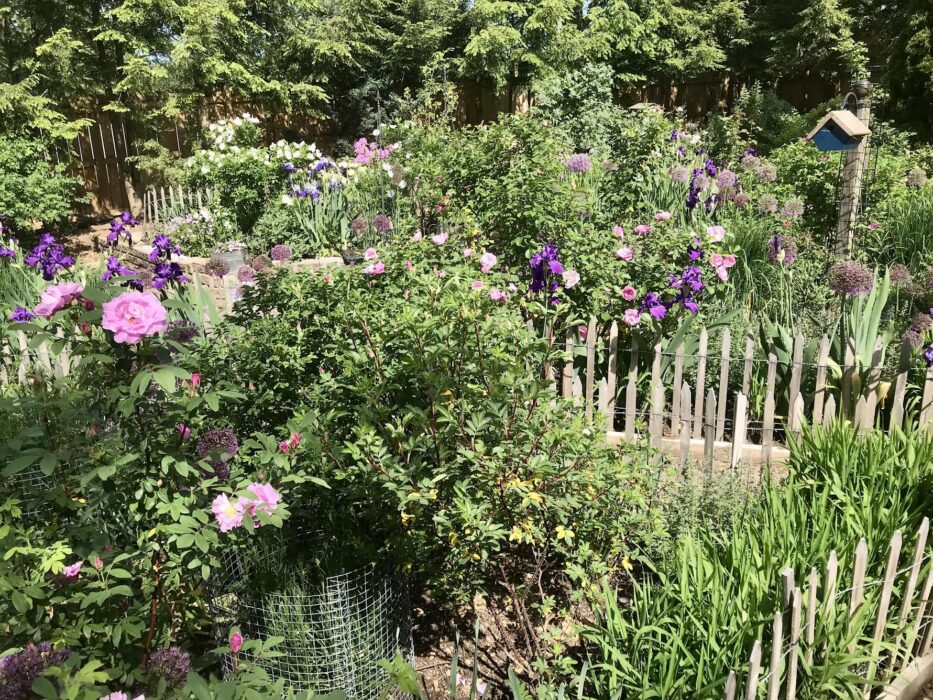
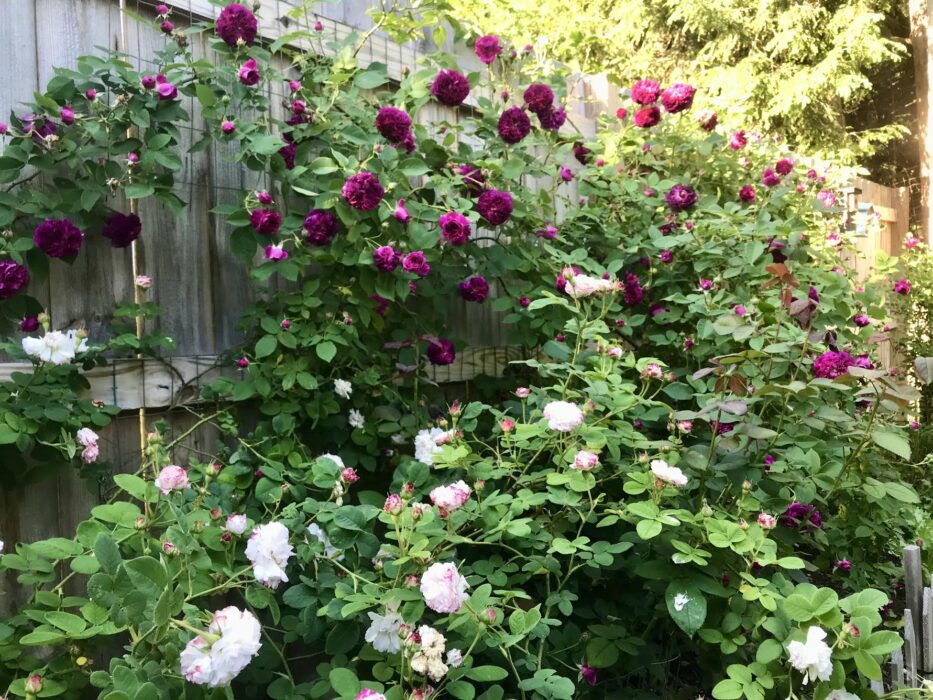
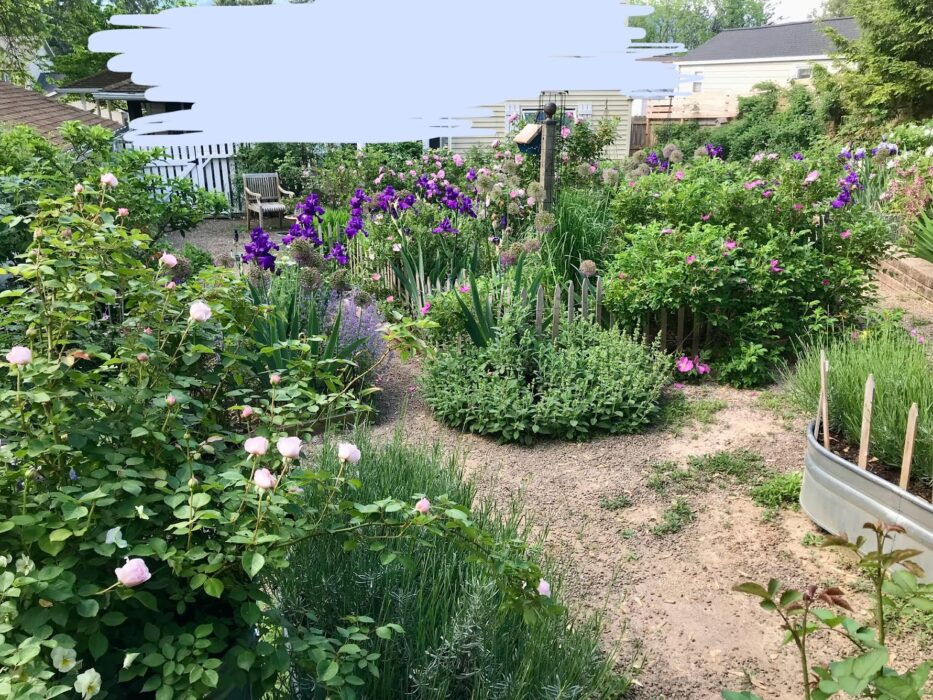
Video taken June, 2021. The garden is a little over 2 years old. I apologize for the blurry images–this was taken with a very old iPhone.
By 2021, less than three years after we dug that first hole, the garden had grown enough to look like it had been there for years. Even knowing how much work we had put in, we were both so surprised at how quickly it matured. I couldn’t believe how many bees we got. By year 2, a nest of green metallic bees showed up in our front garden which we were careful to mow around and we even found a huge bumblebee nest in the chicken barn!
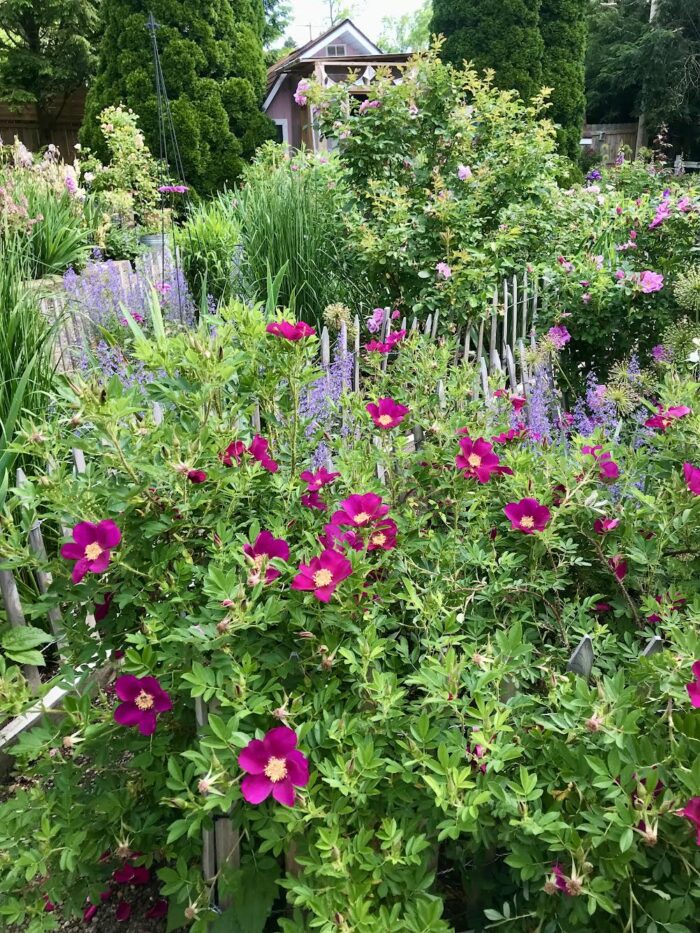
This would be a good time to explain more about our soil-building/mulching process. It’s rather simple, really. In spring, we get a huge delivery of composted horse manure/horse bedding mixed with spent mushroom compost and a tiny bit of topsoil. It’s a blend we purchase from a local landscaper and we’ve been getting deliveries every year since 2009. We distribute that all over the beds–trying to get it in before the daffodils come up which in our garden is around mid-March. This technique has worked well for us; the roses go wild for composted horse manure/bedding. (I think it’s the alfalfa they eat!) In autumn, we sometimes add additional compost to the beds if they are looking like they need a little boost. In our township, there is a composting program for kitchen waste and autumn leaves. They compost what they collect using high-heat processing and supply it back to us for free. In terms of nutrients, it’s not as nitrogen rich as the compost we purchase in spring which is for the best since you don’t want to encourage new growth in autumn.
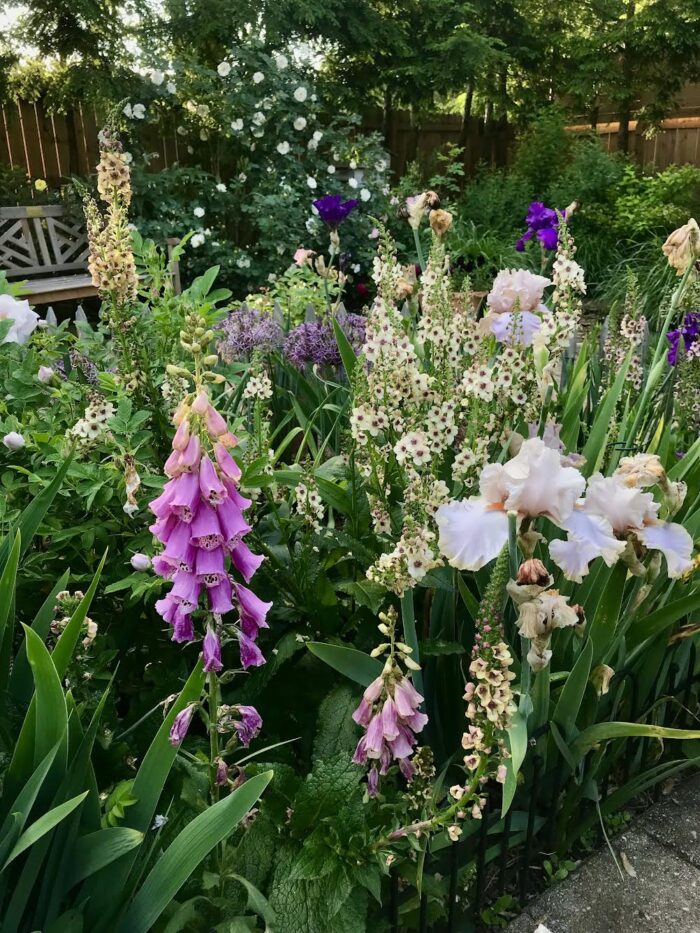
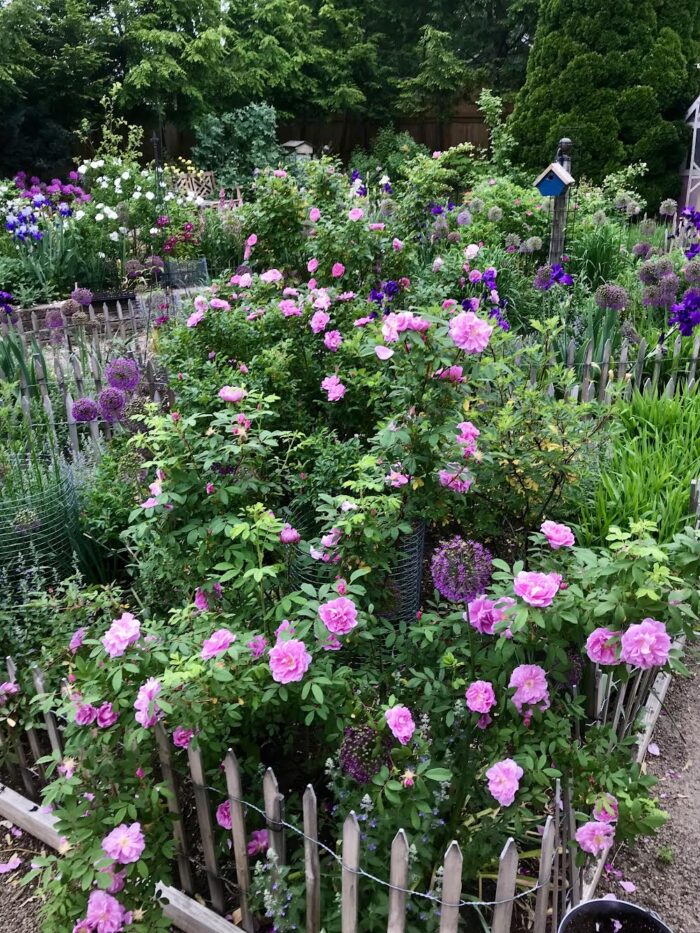
Anyways, that’s the story of how we created that pollinator-friendly garden in the back yard of our former home. I have been meaning to write this post for the past 5 years! Finally, I’ve gotten around to it. By the way, if you’re new and looking for more info on beginning a garden from scratch, check out this post on Tips for Starting a New Garden.
Until next time! 🙂

That is so neat! I’m hoping to do something like that on our property. So far I have roses, climbing roses, and native shrubs and trees!
That sounds so wonderful! You’re creating a haven! 🙂