
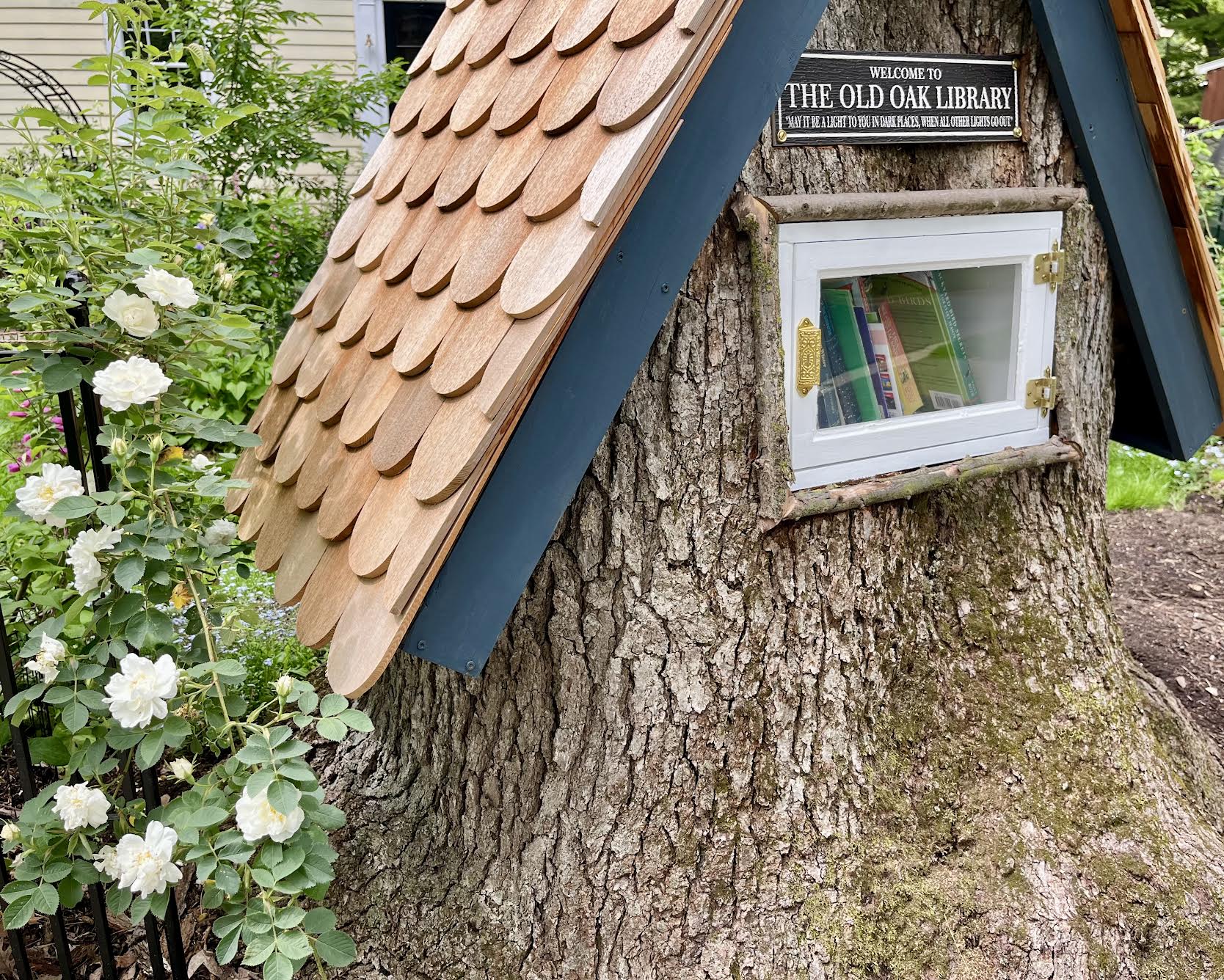
How We Built Our Storybook-Style Little Free Library From an Oak Tree Stump
It’s finally finished…our storybook-esque neighborhood library which we built out of the remains of a recently removed Quercus alba. Here’s the low-down of how we put this project together if you’re interested!
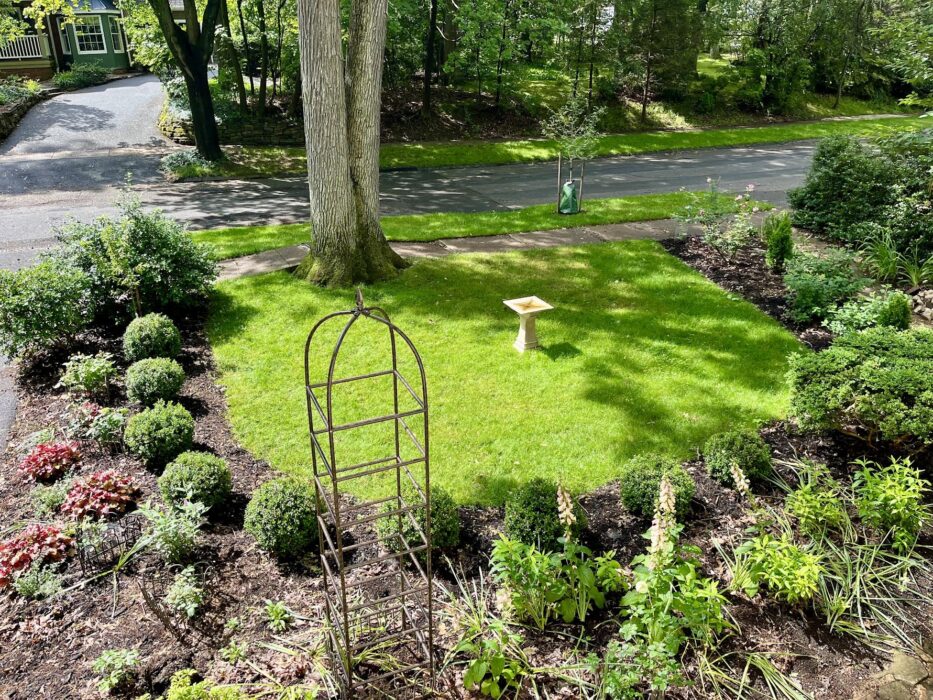
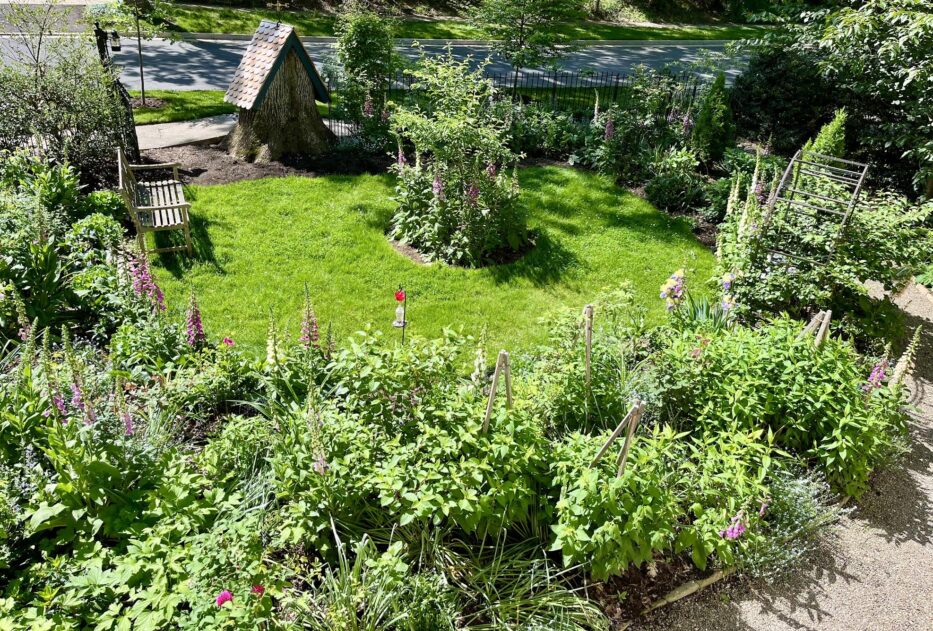
If you’re new here, here’s a recap: the oak tree in question was about 100 years old–predating any of the houses in our neighborhood–part of the forest that once filled the area with a mixture of trees like oaks, maples, hickories and cherries. Some of those original trees remain. In the 1920’s and 1930’s, the land was parceled off and sold to make homes for professors teaching at PSU. Interestingly, that’s still the case for a lot of the homes in our neighborhood–although many are also short-term rentals for folks coming into town for Penn State games and suchlike. Our house was occupied by various professors from it’s construction in 1939 until it was sold to us in 2021. Neither one of us have a current affiliation with the university but we share a kinship with some of the past owners. There was one who loved opera–so do I–and another who taught medieval studies–something Jesse and I both enjoy. I think our home was meant to be!
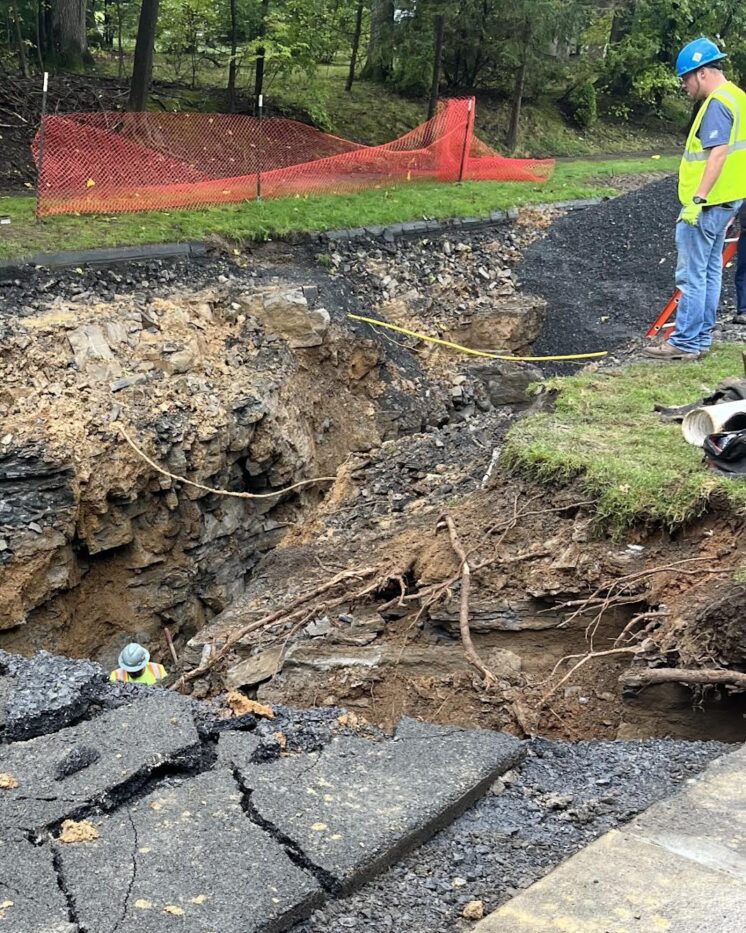
Back to our tree. We spent a lot of money trying to keep this lovely old oak alive…everything from having it trimmed to lighten it’s top weight to being treated for spongy moth. If you want the truth, I’m still a bit salty about that since we spent a lot of our savings and then ended up having to take it down anyways. Unhelpfully, about 2 years ago, a new sewer line needed to be installed on our entire road, beginning with the portion in front of our house. I took a photo of how deep they were digging and to the right of the picture you can see some of the roots from our oak tree that were cut by the diggers. Our arborist (who also happens to manage the trees on campus) was driving home from work and stopped to look at the damage. Afterward, he voiced concerns that this might be the final nail in the coffin for our old and declining tree.
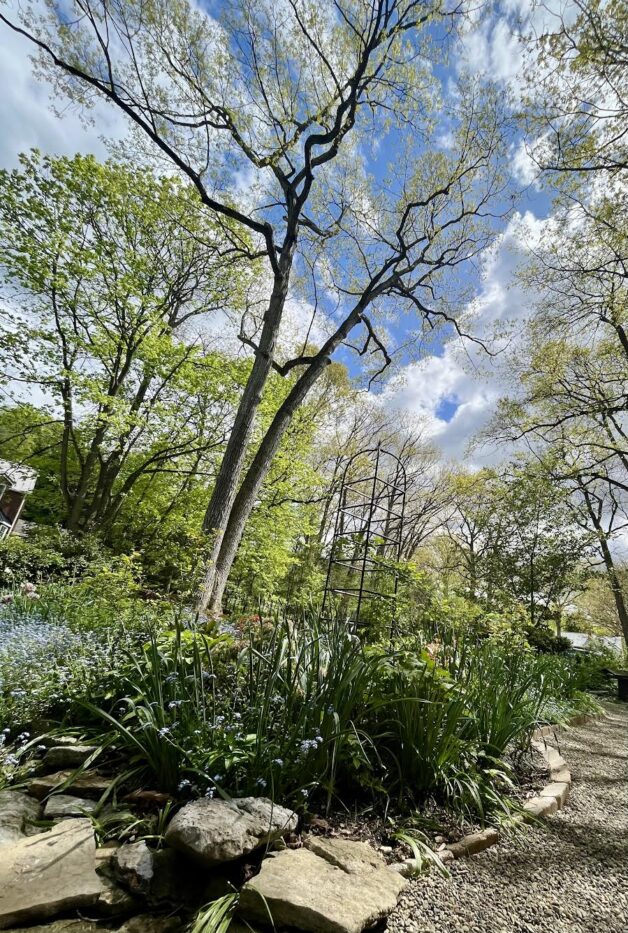
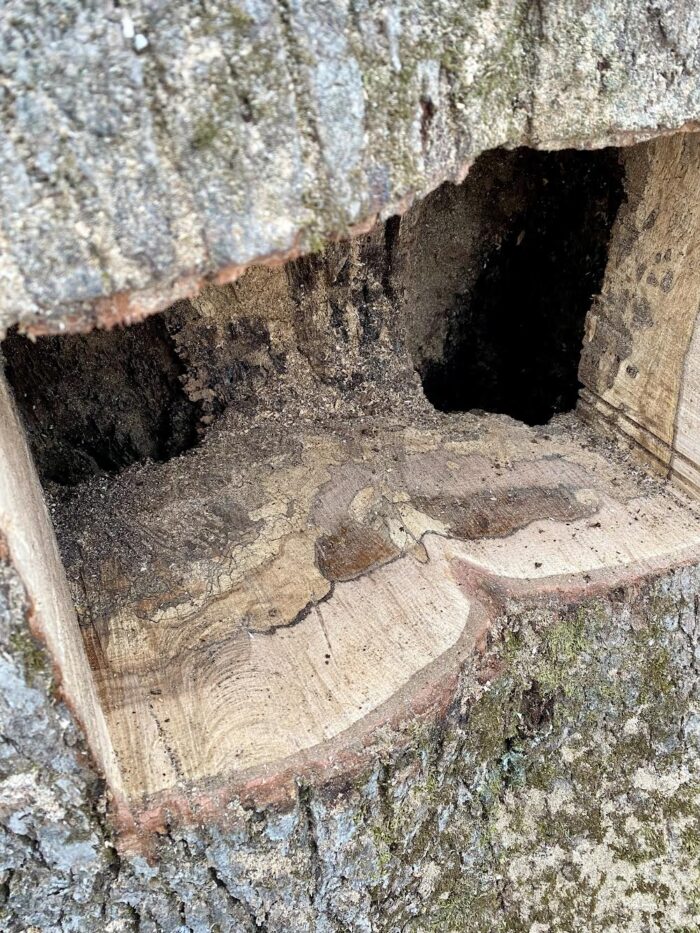
Yet still, we hemmed and hawed. It had a beautiful canopy! It seemed ok? On the one hand, we trusted our arborist who was certain that much of the trunk was rotting from the inside, but I was so worried that we would be removing a tree who still had decades of growth left. For my own piece of mind, I needed to make an evidence-based decision so we threw down a little bit more cash and did one last thing: we hired a PSU Horticulture professor to stop by with a special piece of equipment to perform what is called a “resistograph.” Essentially, it forms a picture of what’s happening inside the tree–how much decay is present versus how much is still healthy trunk. Our tree fell well outside of the range of what is deemed acceptable. Were it in the woods, with no one around, we’d have let it just do it’s thing since we all know how decayed and dead trees are hugely important to the ecosystem. However, this tree was right on the front sidewalk near the road and we couldn’t risk it falling down and causing harm.
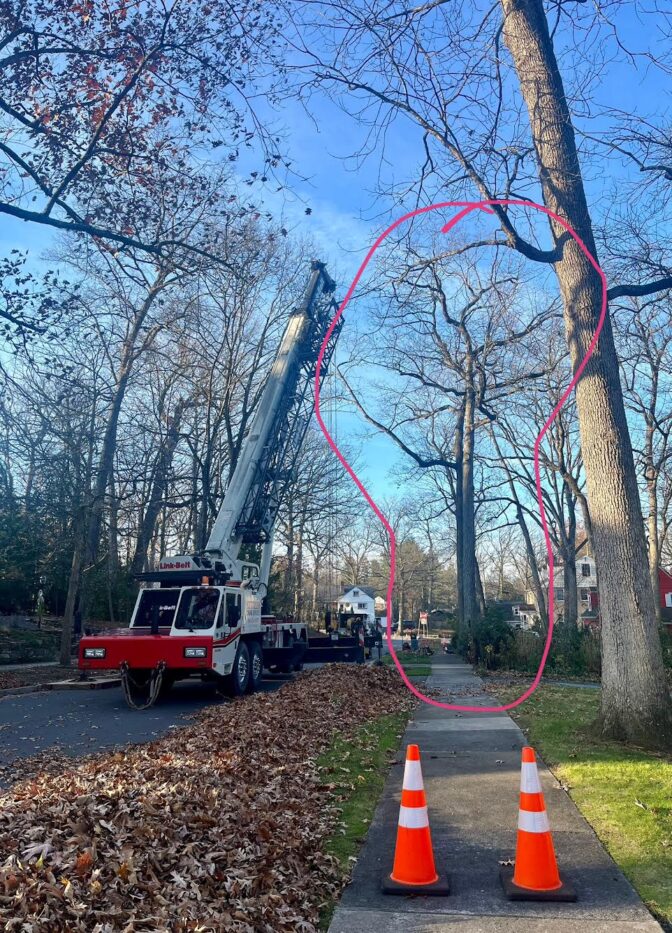
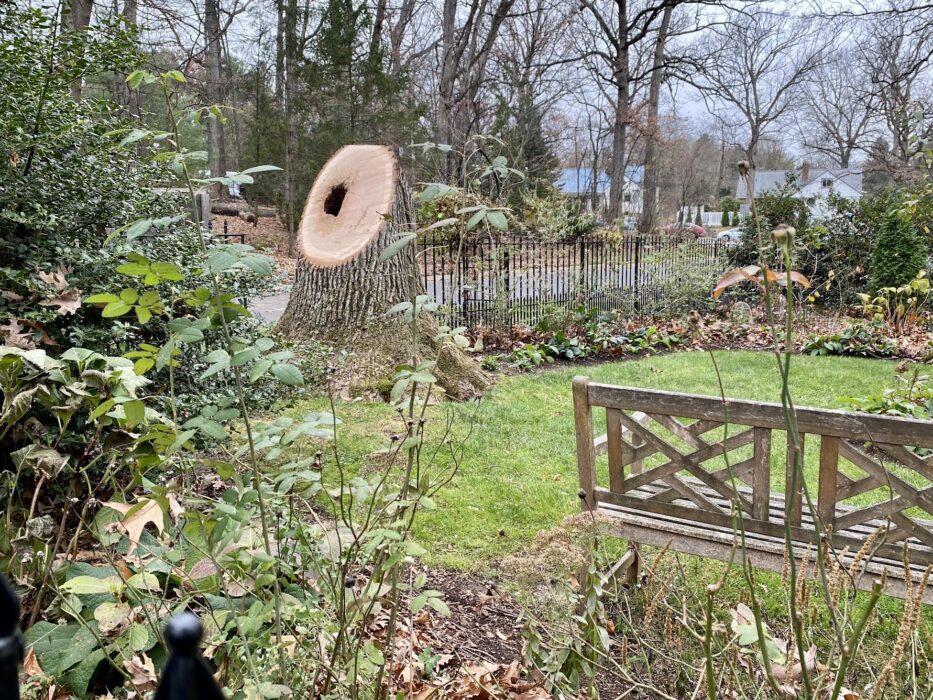
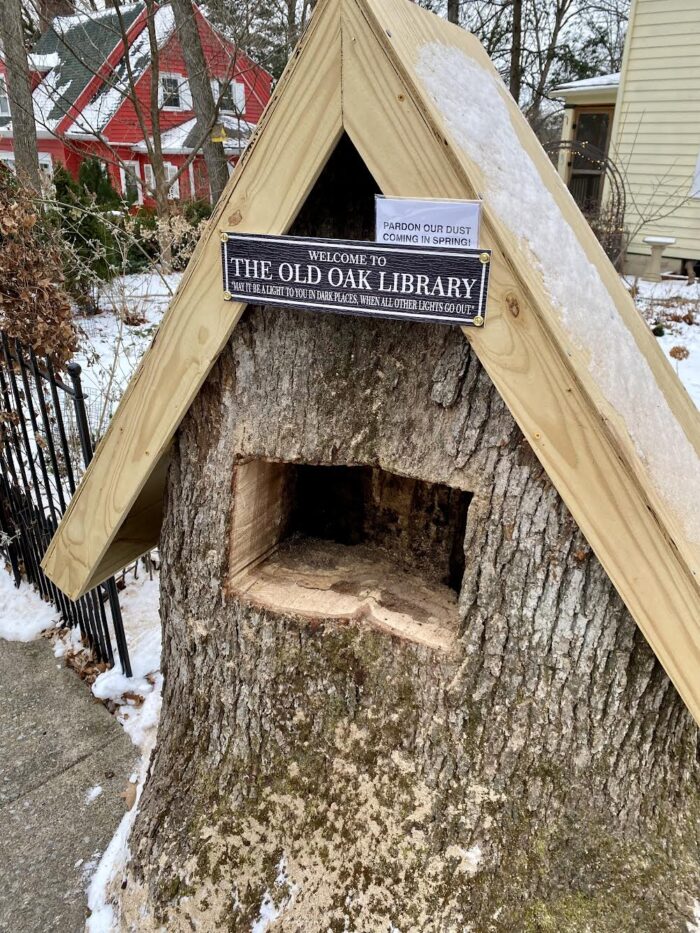
And so, last November, our lovely oak completed it’s final leaf drop in it’s lifetime. Our arborist came out with a crane and his crack team and had it down in a few hours, but not before I came up with the wild idea of turning the stump into a neighborhood library complete with a storybook-style shingled roof. To Jesse’s credit, he was on board, and willing to learn some new skills to make what I envisioned a reality. Our arborist was also excited about the idea and when he cut the trunk he left us a bit of height and cut the top at an angle to form the basis of what would be the new “roof.”
Then, winter came, and boy did it throw a lot at us. It’s been a long time since we’ve had the kind of snow storms that we got last winter and while lovely, it kept us from working on the library. For months, our soon-to-be library looked like this weird tree stump with an angled top and I’m certain the neighbors thought we’d finally gone over the edge.
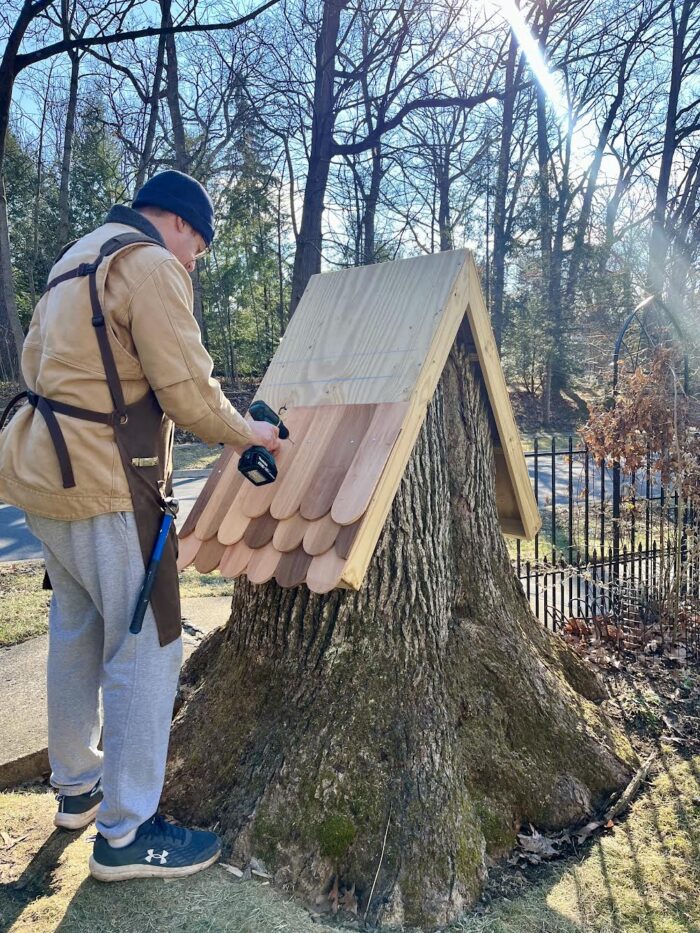
Eventually the snow melted and we got to work. Jesse built a roof structure first out of treated plywood to which we then installed cedar shake shingles. The shingles were a splurge but we reasoned that since this was front and center in our garden it needed to look nice. Jesse also cut out a box shape inside the trunk itself to make a space for the book cubby. Once those two things had been completed, the neighbors grew more interested and we would often get asked when it would be completed. But there was so much more to do….
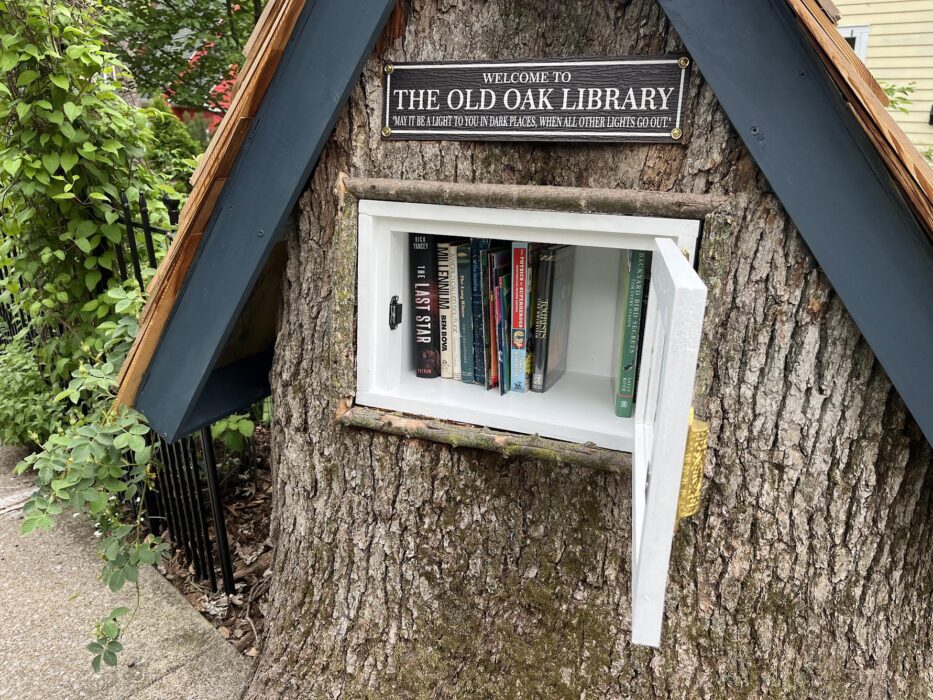
Next, Jesse built a box which I painted first and then he tapped it into the cut out section and screwed it into place. It was starting to look like something now! The door was built from scratch using equipment at The Rivet and some scrap oak we had lying around. We set a piece of plexiglass in the opening (I wanted to use real glass but was convinced not to for safety reasons.) Having a lot of experience with restoring the original sash windows in our home, this tiny door felt like a piece of cake. Once it was installed, the library was ready to go! Just a bit of trim around the opening using branches from our garden and it was off to the races!
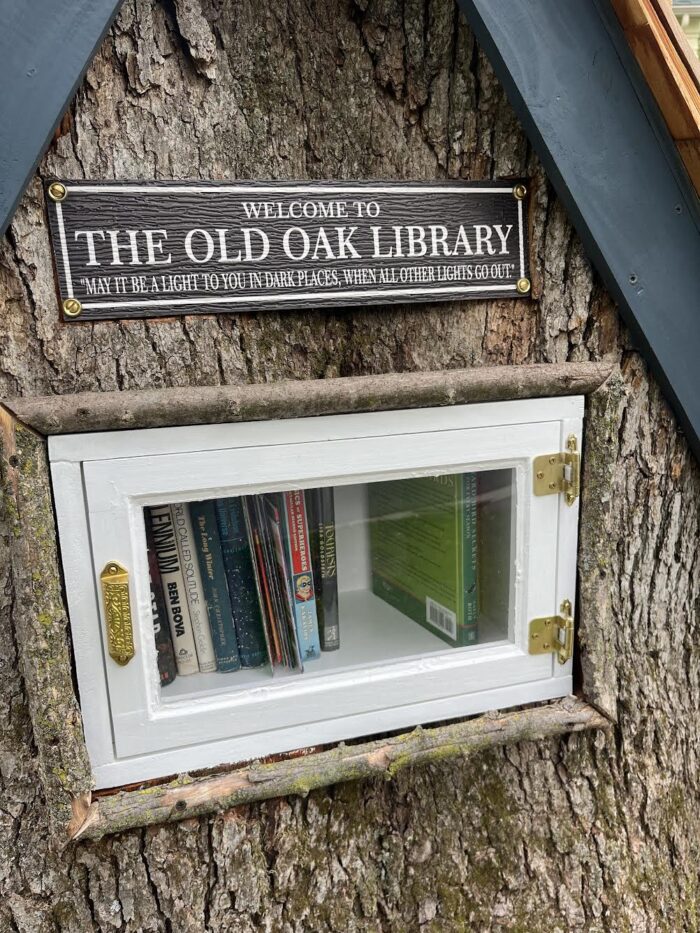
Since it’s been installed we’ve had a lot of positive feedback from our little neighborhood and in light of how awful things feel in the world right now, it truly does make us happy to be able to do something nice for our community.
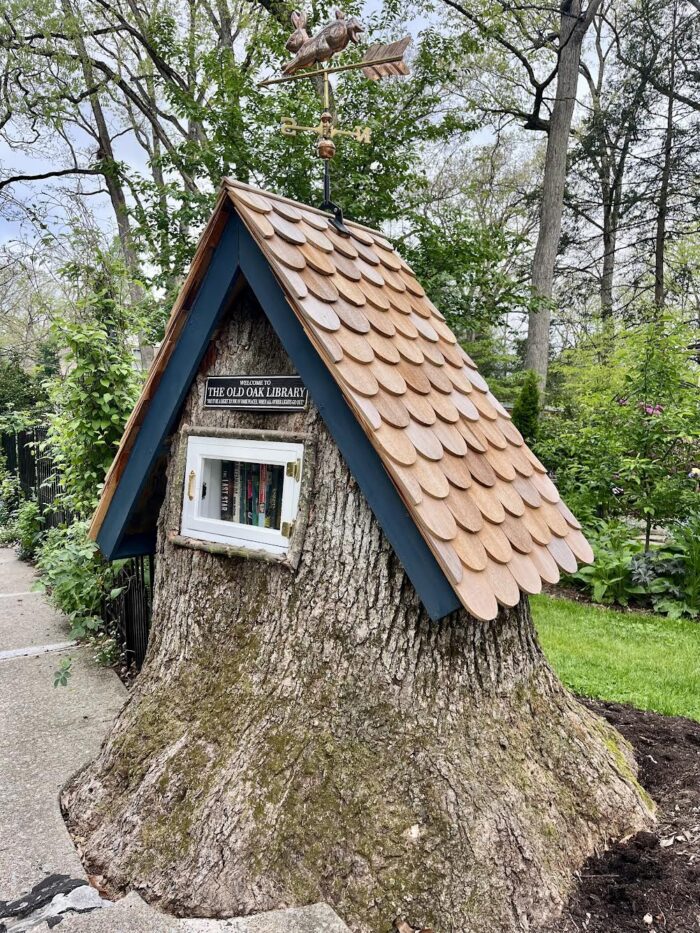
Most of the stuff we used we already had from other projects we’d done over the years, but here is a list of the places where the materials originally came from.
Materials:
Roof/Cedar Shingles: Miller Shingle (the big splurge–but worth it)
Hardware: House of Antique Hardware (These were left over pieces from our kitchen renovation.)
Sign: Nelson Gifts on Etsy (Jesse is a massive Tolkien fan so I added the quote from Galadriel as a surprise.)
Paint: Farrow and Ball (From paint we had left over from work on our house.)
Copper Weathervane: Good Directions (Representing our ever-present family of bunnies)
The rest–screws, plywood, trim, stain, etc., was stuff we had lying around at home.
As always, thanks for reading and if you have any questions please leave them in the comments. 🙂
{ETA: I can’t believe I forgot to mention how we have a family of chipmunks that have been living underneath the tree for the last few years (another tip-off that the tree was hollow inside) and they come and go from the cutest little entrance between the roots. I may need to hang a welcome sign over their doorway…it’s a proper Brambly Hedge situation we’ve got going on!}
This is absolutely amazing. You and Jesse make something unique and beautiful!
Thank you! 😀